


Page 20 - James Ward - A Lioness with a Heron
P. 20
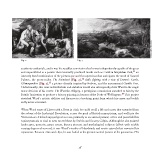
BRISTOL ART GALLERY, BRISTOL
                                                                                                                                                                                               VICTORIA & ALBERT MUSEUM, LONDON

Fig. 2  Fig. 3

academic credentials, and it was his steadfast conviction that he was independently capable of the great
and unparalleled as a painter that eventually produced works such as Cattle in Marylebone Park,11 an
intensely hued combination of the picturesque and the mysterious that anticipates the work of Samuel
Palmer, the proto-realist The Swineherd (Fig. 2),12 Bulls fighting, with a view of Donatt’s Castle,
Glamorganshire (Fig. 3),13 a picture directly inspired by Rubens, and the monumental Gordale Scar.
Unfortunately, this same individualism and ambition would also subsequently drive Ward to the single
worst decision of his career: The Waterloo Allegory, a prestigious commission awarded to him by the
British Institution to produce a history painting in honour of the Duke of Wellington.14 This project
stretched Ward’s artistic abilities and finances to a breaking point from which his career and health
sadly never recovered.

When Ward wrote of Lioness with a Heron in 1848, he could recall a life and career that extended from
the advent of the Industrial Revolution, across the peak of British romanticism, and well into the
Victorian era. He had enjoyed great success, primarily as an animal painter; critics and peers held his
equine portraits to rival or even exceed those by Stubbs and Sawrey Gilpin. Although he also painted
landscapes, portraits, genre scenes, history pictures and mythological subjects (albeit with widely
varying degrees of success), it was Ward’s studies of bloodstock and exotic animals that cemented his
reputation. Between 1800 and 1830, he was hailed as the greatest animal painter of his generation. His

        18

