


Page 270 - The mystery of faith
P. 270
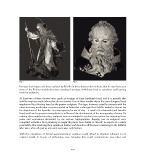
Fig. 1  Fig. 2

Baroque facial types and those realized by Salzillo in these bocetos also indicate that he may have seen
some of the Roman models that were circulated amongst workshops both as templates and learning
tools for sculptors.

At least two of these bocetos were made as versions of Saint Anthony’s head, and it is possible that
Salzillo may have made others that do not survive. One of these models shares the same elongated head
emphasized by a flowing beard as the present sculpture. This type, however, actually contrasts with the
other surviving model that is more rounded in form; this is the type that Salzillo tended to favour for
his depictions of the Apostles. In some aspects the use of clay – a media that demands (and benefits
from) swift and expressive manipulation – influenced the development of the iconography of saints. By
making their models from clay, sculptors were encouraged to explore new options for capturing those
poses and expressions demanded by the various hagiographies. Equally, just as sculptors were
compelled towards a freer plasticity, so might they have been drawn to ‘sketch’ in aspects of a saint’s
personality, thus rendering their sainthood distinct and therefore all the more convincing to the faithful,
who were, after all, just as any saint once was, only human.

With this abundance of formal experimentation sculptors could afford to abandon adhesion to an
original model in favour of elaborating new formulae that could communicate new ideas and

        270

