


Page 278 - The mystery of faith
P. 278
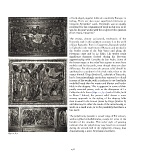
Figs. 1a, b, c  of hard-edged, angular folds are manifestly Baroque in
                feeling. There are also some superficial references to
                Gregorio Fernández’ work. Fernández was as equally
                renowned for his commissioned work in this area as he
                was for his joint works with the sculptor Pedro Jiménez
                (from Viana, Navarre).3

                The strong, almost caricatural, tendencies of the
                Romanist style in this sculpture connects it to the work
                of Juan Bazcardo. Born in Caparroso, Bazcardo settled
                in Cabredo in the south-west of Navarre and worked in
                the border towns of the País Vasco and along the
                Navarran coast and in La Rioja. His works retain
                significant elements derived during his five-year
                apprenticeship with González de San Pedro. Some of
                the human types in this relief here appear to stem from
                models used by Bazcardo, even though there are clear
                differences. For this reason the present relief should be
                attributed to a sculptor in his circle rather than to the
                master himself. Diego Jiménez II, a disciple of Bazcardo,
                had a less painstakingly meticulous approach to detail
                in some of his works, with a tendency to use less finely
                modelled heads than his master and blunter and harder
                folds in the drapery. This is apparent in some of their
                jointly executed pieces, such as the altarpieces of La
                Población de la Barca (Figs. 1a, b, c) and of Dallo, both
                in Álava.4 Indeed, the present relief shows a more
                cursory approach to the styling of the drapery folds
                than is usual in the known pieces by Diego Jiménez II,
                and this may be either the result of the artist having to
                work on a small scale; or to the possibility that this is a
                late work.

                The polychromy presents a varied range of flat colours,
                without gilded embellishments, except for some of the
                borders of the mantles. This sober style of painting
                indicates that the polychromy may have been executed
                during the second half of the eighteenth century, thus
                demonstrating a more Neoclassical aesthetic.

                 278

