


Page 18 - Joseph Wright of Derby: Virgils's Tomb & The Grand Tour.
P. 18
encouraged by friends to write what would undoubtedly

                                                          have been a fascinating autobiography, as on occasions he

                                                          could be a beguiling raconteur, he carried his secrets to the

                                                          grave. He did tell me that after the armistice there was so

                                                          little food that the sailors were literally starving and one

                                                          day in desperation had gone to forage and steal eggs from a

                                                          farm. However there was no butter or fat with which to fry

                                                          the eggs so, it being a remarkably hot summer, they fried

                                                          them in the heat of the sun on the U boat casing – in diesel

                                                          engine oil – which proved disgusting! His father, Dr. Leo

                                                          Catzenstein known locally as ‘The Little Doctor’, my

                                                          grandfather, a co-founder of the Niedersächsisches

                                                          Landesmuseum, Hanover and an art lover and founder of

                                                          the Kaestner Society which I believe sponsored and

                                                          financially helped young and upcoming artists, including

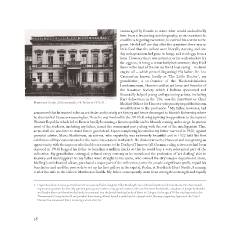
Matthiesen Gmbh., Bellevuestraße, 14, Berlin in 1926-31.  Kurt Schwitters in the ‘20s, was the Sanitätsrat or Chief
                                                          Medical Officer for Hanover who piously hoped that his son

                                                          would follow in the profession.3 My father, however, had

announced that he wanted to be an art dealer and to study art history and hence decamped to Munich University where

he also studied Literatturwissenschaften.There he was involved in the 1919 left wing uprising in opposition to the nascent

Weimar Republic which led to Bavaria briefly becoming a Soviet republic and to Munich coming under siege. In protest

most of the students, including my father, joined the communist party along with the rest of the intelligentsia.This,

as we shall see was later to stand him in good stead. Upon completing his studies my father married in 1920, against

parental advice, Maria Matthiesen, an actress, who reputedly was extremely beautiful and in 1922 held his first

exhibition of Impressionists under the name Zatzenstein in Munich. He then returned to Hanover and recognising an

opportunity with the impoverished noble successors to the Duchy of Hanover (all German ruling aristocrats had been

deposed in 1918) begged his father to loan him a million marks so that he could buy a very substantial part of the

collection. My grandfather, outraged, refused every entreaty as he considered the profession of ‘art dealing’ akin to

knavery and skulduggery! So my father went straight to his uncle, who owned the city’s major department store,

Molling’s and obtained a loan, purchased a major part of the collection, turned it, made a significant profit, repaid his

benefactor and used the proceeds to set up his first gallery in the capital, Berlin, at Friedrich-Ebert Straße, 8 naming

it after his wife as the Galerie Matthiesen Gmbh. My father consequently went from strength to strength and rapidly

3. I reproduce here a bronze portrait bust of Leo executed by his daughter, Ellen Bernkopff. Leo collected netsuke and old miniatures. He often treated
   impecunious patients for free. My paternal great grand-mother on my grand-mother’s side was Henriette Rothschild, a daughter of Joseph Rothschild
   and Rosalie Stern and therefore the family is connected into the Jewish banking family of Stern in Cologne.At the age of 92 she was deported to the
   Theresienstadt Camp by the SS and perished there having offered herself a substitute for a Jewish child. She was a legendary figure and the City of
   Hanover has announced that it is naming a street after her.

18

