


Page 40 - Luca Giordano - Liberation of St Peter
P. 40
occasions, such as The Liberation of St Peter, he preferred
to tackle a classic composition head on and re-do it anew.

                 lll

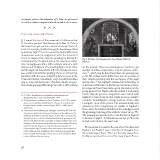
THE LIBERATION OF ST. PETER                                               Fig. 2. RAPHAEL, The Liberation of St. Peter, Vatican, Stanza di
                                                                          Eliodoro.
I t was at the time of this crossroad of influences that
   Giordano painted The Liberation of St. Peter. St. Peter’s              on the ground. These two paintings are similar to yet
liberation from jail was not a common baroque theme. It                   another Giordano composition, now in a private collec-
is not, for example, included among the Barockthemen listed               tion,25 which may be dated later than our painting (see
by Andreas Pigler24 nor is it quoted by Émile Mâle in his                 p.24). All of these works differ from ours on account of
monumental work on religious art after the Council of                     their simplicity having only the two figures of the angel
Trent. In Naples there was the painting by Battistello                    and the saint.26 But Raphael’s Liberation of St. Peter [Fig. 2]
Caracciolo at the Pio Monte (see p.14), done in an ortho-                 in the Stanza d’Eliodoro in theVatican constitutes a classic
dox Caravaggesque style, with a simple view of a dark                     prototype and must have made a great impression on the
interior and six figures.The standing figures of St. Peter                young painter from Naples when he studied it in the early
and the angel exit towards the left. But Giordano it seems                1650s. That the present composition was created with
was not interested in this painting.There are at least two                Raphael’s version in mind is clear. Unlike previous examples
paintings with the same subject by Ribera (now at the                     it is in the‘Grand Manner’, as large in size as a fresco, with
Prado and Dresden, respectively - see p.16) which Giordano                a complete view of the prison. The monumentality and
may or may not have known. They have simple compos-                       symmetry of the composition are similar to Raphael’s
ition showing an angel liberating Peter who is still reclining            fresco as are the idealized nobility of the main figures and
                                                                          the gleaming rendering of the soldiers’ armor (see p.39).
24. A. Pigler, Barockthemen: eine Auswahl vonVerzeichnissen zur           The painting was intended to be a meditation on Raphael
   Ikonographie des 17. und 18. Jahrhunderts, 1974.                       at his most complete. It is Roman in concept yet Venetian
                                                                          in style and colour at the same time.
25. The painting was exhibited in Luca Giordano 1634-1705, quoted
   above, n. 55, and later included in O. Ferrari, G. Scavizzi, Luca        Not much has been said in the past about Giordano and
   Giordano. Nuove ricerche e inediti, Naples 2003, n. A083, dated        Raphael, but Raphael was in Giordano’s thoughts from
   1660-1663.                                                             his earliest days in Rome.There are the early copies from
                                                                          the Stanze, produced on one of his many trips to Rome,
26. The entry in the Sotheby’s sale catalogue December 8th 2010 lot
   32 points to similarities between the figures of the soldiers in the
   Liberation of St Peter and similar figures in two other compositions,
   also by Giordano, with the Resurrection of Christ (a painting in the
   church of S. Maria del Buonconsiglio in Naples datable 1665 and a
   drawing in the Hessishes Landesmuseum in Darmstadt).This only
   confirms the fact that, due to the enormous production of
   religious paintings, Giordano often used similar ideas in works of
   related subjects, and of different dates. Sotheby’s proposed that
   the Darmstadt drawing dated by Ferrari to 1677 should be dated
   to the 1660s but this is an error.

38

