


Page 43 - Luca Giordano - Liberation of St Peter
P. 43
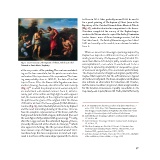
Fig. 6. LUCA GIORDANO,The Baptism of Christ,Toledo,Catedral    La Nova in 1655. Also, probably around 1655 he used it
Primada se Santa Maria, Baptistry.                             for a panel painting of The Baptism of Christ (now in the
                                                               Baptistery of the Catedral Primada Santa Maria de Toledo
at the very centre of the painting.The contours and shad-      [Fig. 6]), which is identical in composition to the fresco.
ing are the bare essentials, but the painter seems to have     Giordano completed his survey of the Raphaelesque
understood the importance of the expressions.The draw-         works in theVatican when he copied The Battle of Constantine
ing was probably done in 1650-51, the date of his first        twelve times - none of these drawings survive, but his
trip to Rome. After the Stanza della Segnatura we have         first dated work, The Battle of Maxentius signed and dated
another drawing, Fortitude, also offered for sale recently     1651 and recently on the market, is an obvious derivation
[Fig. 4],29 in which the plump forms of women and putti        from it.
are underlined with insisted contour. Even if, unfortu-
nately, part of the outline and high light in white appears      When we move from drawings to paintings inspired by
lost, the monumentality of the original is respected and       Raphael we leap into a different territory of works of a
the putti have the grace of the original. After the Stanza     much greater beauty. The Baptism of Christ (Catedral Pri-
d’Eliodoro we have The Dream of Jacob (British Museum,         mada Santa Maria de Toledo) is justly considered a major
London [Fig. 5]), understandably believed to be by Raphael     accomplishment, even when it was believed to be a
and the most interesting drawing of the series. Here we        forgery. In symmetry, simplicity of composition, grace
have the complete representation of the fresco, with the       of movement and gesture, it is a marvelous poetic fantasy.
background sketched with elegant, abbreviated lines and        The draperies have the straight and angular quality of the
the main figures fully sculpted with great energy.30 Lastly,   Raphael that inspired it, but the soft volumes are typical
after the Logge we have the unfinished Baptism of Christ,      of Giordano’s early work.The dense atmosphere and shadows
(recently discovered at the Musée de Nancy),31 which           also indicate an admiration for Sebastiano del Piombo,
also appears to belong, like the previous sheets, to the       and the warm tonalities, in general, show an appreciation
more mature crop of drawings executed around 1654.             for the Venetian Renaissance. Equally remarkable is The
Giordano kept this last composition in mind and repli-         Holy Family with St John (Museo del Prado, Madrid formerly
cated it in a fresco of the same subject painted for S. Maria
                                                               27. B. De Dominici, Vite dei Pittori, Scultori ed Architetti Napoletani, 3
                                                                  vol.s, 1742-1745, III, p. 396: ‘Raccontava aver disegnato più, e più
                                                                  volte le logge, e le stanze dipinte da Raffaello, e ben dodici volte l’intera
                                                                  battaglia di Costantino dipinta dall’eccellente Giulio Romano...’

                                                               28. Sold Old Master Drawings, Christie’s London South Kensington
                                                                  17.12.98 n. 60.

                                                               29. Sold Old master Drawings, Christie’s London South Kensington
                                                                  17.12.98 n. 57.

                                                               30. The three drawings are listed in O. Ferrari, G. Scavizzi, Luca
                                                                  Giordano, L’opera completa, Naples 1992 (n. D6) and Idd., Luca
                                                                  Giordano 2003, quoted above (nn. D021, D019)

                                                               31. Splendeurs baroques de Naples. Dessins des XVIIe et XVIII siècles, catalogue
                                                                  of the exhibition, Poitiers 2006, n. 47 pp. 112f.

                                                               41

