


Page 36 - James Ward - A Lioness with a Heron
P. 36
line. While Ward’s approach to landscape and handling in this work could safely be termed Rubensian,
it is his scientific understanding of canine anatomy and behaviour that enabled him to capture the
emotion behind the dog’s actions, making his picture truly Romantic, rather than merely observational
Ward later employed this same objectivity, baroque handing and theatrical compression of forms in
Lioness with a Heron. By painting the lioness and her prey as specific animals and according to their
inherent natures, and by avoiding any overt sense of allegory or symbolism,52 Ward maintained the
innate power of his subject matter to produce a work that evoked the beauty, sensuality and power of
Rubens’s hunting subjects, but was in no way dependent on them.

lll

U ntil about 1845, Ward continued to paint pictures of lions or tigers,53 and to excel at sporting
          subjects in general. However, he never painted another wild animal subject that matched
          Lioness with a Heron either in originality or quality. In fact, with the possible exception of

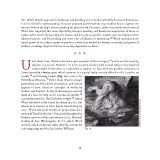
Lioness pierced by a hunting spear, which survives in a partial study recently offered on the London art

market,54 and Sleeping Lioness (Fig. 10), now in the

Fitzwilliam Museum,55 by the 1820s Ward no longer

painted big cats from direct observation, and instead

appears to have relied on examples in works by

Rubens and Snyders. A very Rubensian pen and ink

study of a lion, recently on the London art market,56

is possibly related to The Disobedient Prophet,57 which                                                   © THE SYNDICS OF THE FITZWILLIAM MUSEUM, CAMBRIDGE

Ward exhibited at the Royal Academy in 1833, but

which he is known to have begun formulating by

1817. Ward also made studies in preparation for a

version of Daniel in the Lions’ Den, possibly inspired by

Rubens’s picture of the same subject (1615, National

Gallery of Art, Washington, D.C), which Ward

would surely have known either directly, or from the

1789 engraving made by his brother William.                Fig. 10

                                             34

