


Page 32 - James Ward - A Lioness with a Heron
P. 32
© TRUSTEES OF THE BRITISH MUSEUM

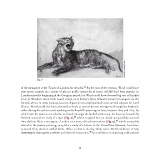
                  Fig. 8

of the menagerie at the Tower of London for decades.45 By the turn of the century, Ward could have
seen exotic animals in a variety of places: public spectacles of exotic wildlife had been popular in
London since the beginning of the Georgian period, but Ward could have observed big cats at Sandpit
Gate in Windsor Great Park (until 1830), or at Polito’s (later Edward Cross’s) menagerie on the
Strand, where, in 1808, Jacques-Laurent Agasse (1767-1849) painted exotic animal subjects for Lord
Rivers. Ward could also have observed animals at several private menageries throughout England,
either during his earlier travels working under Boydell’s patronage or later, between 1805 and 1815, by
which time his patrons extended far and wide amongst the landed aristocracy. At least one beautifully
finished watercolour study of a tiger (Fig. 8),46 which is signed but not dated, was possibly executed
directly from life at a menagerie. Another even more refined watercolour (Fig. 9),47 which is possibly
related to the present painting, may, like a study of a bittern in the Fitzwilliam Museum, have been
executed from dead or stuffed birds. What is clear is that by 1808, when Ward exhibited A Lion
sharpening his claws against a cork tree at the British Institution,48 his confidence in depicting wild animals

                                                  30

