


Page 254 - The mystery of faith
P. 254
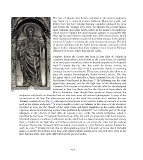
The type of atlantes that Rovira embodied in the present sculptures
                                                     was based on a sixteenth-century Italianate Mannerist model, and
                                                     differs from the later Catalan Baroque examples produced by Grau
                                                     and Rovira the Younger after 1680. As atlantes, the present figures
                                                     sport cushions upon their heads, rather in the manner of sombreros,
                                                     which serve to replace the usual classical capitals. It is possible that
                                                     these figures were meant to represent two of the moral virtues, which
                                                     Peréz Santamaría believes would not have been unusual in the specific
                                                     context of Catalan art during the early seventeenth century. The lack
                                                     of specific attributes and the rather devout attitude expressed in both
                                                     figures further indicates that these sculptures were meant to illustrate
                                                     allegories of virtues, rather than specific saints.

                                                     Domènec Rovira the Greater was born in Sant Feliu de Guíxols in
                                                     Catalonia along what is now known as the Costa Brava. He travelled
                                                     at an early age to Barcelona, where he became apprenticed to Augustín
                                                     Pujol.10 Despite the fact that few works by Rovira survive, we
                                                     fortunately have some idea of their appearance thanks to surviving
                                                     contracts for their commissions. These same contracts also allow us to
                                                     place the atlantes chronologically within Rovira’s oeuvre. The first
                                                     document dated 1638 describes a shrine (sagrario) for the Church of
                                                     Sant Jaume (Saint James) in Barcelona.11 The following year the artist
                                                     signed two contracts, one for the high altar of the Monastery and
                                                     Convent of Bon Succés in Barcelona12 and the other for the altarpiece
Fig. 1 dedicated to Sant Pau (Saint Paul) in the Church of Santa María del
                                                     Mar in Barcelona. Even though these works no longer survive, the
          sculptures and reliefs are described and we also have some old archival photographs. A piece of the
          central part of the Sant Pau altar survives and it is this work that permits us to attribute the two
          Atlantes considered here (Fig. 1), although the description in the contract makes no mention of works
          such as the present sculptures.13 It is not possible to place our Atlantes in the context of the altarpiece
          executed in 1665 for the Chapel of the Holy Cross and Mary Magdalen in the parish church of
          Figueres, whose commissioning contract was published by Madurell,14 nor indeed as part of the large
          altarpiece in the Church of Sant Feliu de Guíxols (1657–1678), the artist’s birthplace, which is
          described by Barraquer.15 Fragments from the base of this last work are preserved in the town museum.
          Martinell mentions a number of additional works, which had not been previously documented, among
          these a retablo for the high altar at L’Arboç commissioned in 1670 from the artist and his nephew,
          Domènec Rovira (the Younger). Still incomplete at his death in 1678, Rovira’s nephew finished the
          work by 1681.16 Despite the fact that no photographs survive of this work we know that it included
          jasper or marble decorations in its base, and atlantes which, having been executed after 1670 in the
          later Baroque style, were quite different from the present works.

                                                                            254

