


Page 253 - The mystery of faith
P. 253
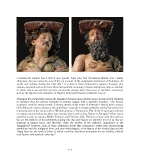
Conventional wisdom has it that it was Agustín Pujol who first introduced atlantes into Catalan
altarpieces, but we cannot be sure of this on account of the widespread destruction of buildings, art
works and archives during the Civil War.4 It is Aurora Peréz Santamaría’s opinion, however, that
atlantes, caryatids and even herms all carried symbolic meaning in Catalan altarpieces, often as symbols
of virtue, that is, up until the very late seventeenth century where they come to symbolize continents,
such as the figures in the altarpiece of Nuestra Señora del Rosario in Mataró (1691).5

Writing in the seventeenth century, the Spanish ecclesiastic man of letters Juan Caramuel cited Vitruvius
to maintain that the earliest examples of atlantes always held a symbolic function: ‘The Persian
sculptures served to remind Greek or enemy citizens of the virtue of fortitude’.6 Nearly half a century
later, Athanasio Genaro Brizguz y Bru stated that ‘caryatids no longer symbolize slavery but instead are
representations of the virtues such as Wisdom, Justice or Temperance. Nor do the Persian-type columns
or atlantes represent slavery either, but, instead, virtues such as Joy, Valour or Strength.’7 More recent
authorities, such as Luciana Müller Profumo and Professor John Varriano, concur with this opinion,
but are less insistent on the symbolism, stating only that such figures are symbolic in so far as they are
supports in human form, and therefore evoke the burden of the enslaved, imprisoned or the
vanquished.8 However, none of these authorities doubt that Renaissance artists were incorporating
symbolism into this sculptural form, and even Michelangelo, in his figures of the Bound Slave and the
Dying Slave for the tomb of Julius II, which could be considered prototypes for our atlantes, imbued
such figures with symbolic meaning.9

                                                                 253

