


Page 263 - The mystery of faith
P. 263
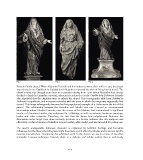
Fig. 1  Fig. 2       Fig. 3

Peinado family chapel. When Alejandro Peinado and his mother co-wrote their will in 1726, the chapel
was referred to as Capilla de la Soledad (and Alejandro expressed his wish of being buried there). The
chapel’s name was changed years later in a testament dating from 1739 (when Alejandro had already
decided to fund the Carmelite convent), wherein it is referred to as the Capilla de la Dolorosa. Peinado
also stipulated that the chaplains were to inherit the chapel. This iconographic shift from Soledad to
Dolorosa is significant, and moreover coincides with the years in which the image was supposedly first
carved. This image subsequently became the first popularized example of a Dolorosa in the art of this
period. The relationship between the Peinados and Salzillo was not a casual or circumstantial
relationship either. Nicolás Peinado, over the course of his lifetime, had accumulated a significant
number of devotional works, clay sculptures for a Nativity, as well as portraits, landscape paintings,
books and other artworks. Therefore, the fact that the Santa Ana polychromed Dolorosa has
dimensions rather larger than those normally pertinent to a boceto indicates that this sculpture was
effectively a reduced version of Salzillo’s very successful public model, and was intended for private use.

The work’s undisputable Italianate character is explained by Salzillo’s heritage and formative
influences, but the theory that this piece might have been a joint effort by Nicolás and Francisco Salzillo
requires consideration. Comparing the exhibited work to the boceto we see no traces of Nicolás’s
somewhat brusque technique. Instead, there is a delicate and subtle quality that is exclusively

                263

