


Page 43 - Joseph Wright of Derby: Virgils's Tomb & The Grand Tour.
P. 43
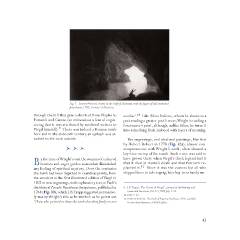
Fig. 7. JOSEPH WRIGHT, Grotto in the Gulf of Salernum, with the figure of Julia banished
from Rome, 1780, Private Collection.

through the hill that gave a shortcut from Naples to         another’.10 Like Silius Italicus, whom he shows as a
Pozzuoli and Cumae (so miraculous a feat of engin-           poet reading a greater poet’s verse,Wright is reading a
eering that it was attributed by medieval writers to         forerunner’s print, although, unlike Silius, he turns it
Virgil himself).9 There was indeed a Roman tomb              into something fresh, imbued with layers of meaning.
here and in the sixteenth century an epitaph was at-
tached to the rock outside.                                    The engravings, and idealised paintings, like that
                                                             by Hubert Robert in 1778 (Fig. 32a), almost con-
                 lll                                         temporaneous with Wright’s work, often showed a
                                                             bay-tree on top of the tomb. Such a tree was said to
B y the time ofWright’s visit the swarms of cultured         have grown there when Virgil’s died; legend had it
    tourists and eager guides somewhat diminished            that it died at Dante’s death and that Petrarch re-
any feeling of spiritual mystery. Over the centuries         planted it.11 Since it was the custom for all who
the tomb had been depicted in countless prints, from         stopped there to take a sprig, later bay-trees barely sur-
the woodcut in the first illustrated edition of Virgil in
1502 to new engravings, with explanatory text, in Paoli’s    9. J.B.Trapp, ‘The Grave of Vergil’, Journal of theWarburg and
Antichita di Possulo: Puteolanae Antiquitates, published in     Courtauld Institutes,Vol 47 (1984)pp. 1-31.
1768 (Fig. 30), which J.B.Trapp suggested persuasive-
ly was by Wright’s side as he worked: as he points out       10. Ibid. P 25.
‘Those who painted or drew the tomb also drew freely on one  11. Hubert Robert, The Tomb ofVirgil at Posillipo,1784, La Salle

                                                                University Museum, Philadelphia.

                                                                                          43

