


Page 46 - Joseph Wright of Derby: Virgils's Tomb & The Grand Tour.
P. 46
© DERBY ART GALLERY                                                                            of symbolic stones to conjure up Romantic ruminations on
                                                                                               irretrievable greatness’.16
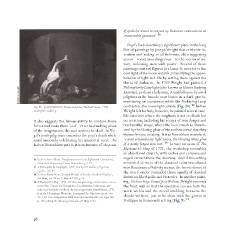
                     Fig. 8b. JOSEPH WRIGHT, Romeo and Juliet.TheTomb Scene, 1790.
                     Derby Art Gallery.                                                          Virgil’sTomb also takes a significant place in the long
                                                                                               line of paintings by Joseph Wright that celebrate in-
                     it also suggests the human ability to conjure those                       vention and ‘making’ in all its forms, often suggesting
                     forms and make them ‘real’. It is the dwelling place                      access – sometimes dangerous – to the secrets of na-
                     of the imagination, the soul within the skull. AtVir-                     ture, endowing men with power. Several of these
                     gil’s tomb pilgrims remember the poet’s death while                       paintings contrast figures in a lamp-lit interior to the
                     simultaneously celebrating his immortal verse. As                         cool light of the moon outside, intensifying the appre-
                     Robert Rosenblum puts it, it is an instance of ‘the power                 hension of light and life by setting them against the
                                                                                               threat of darkness. In 1769 Wright had painted A
                     16. Robert Rosenblum, Transformations in Late Eighteenth-Century Art,     Philosopher by Lamplight (also known as Hermit Studying
                        Princeton University Press, Princeton, p. 117.                         Anatomy), perhaps a holy man, stumbled upon by awed
                                                                                               pilgrims as he broods over bones in a dark grotto,
                     17. A Philosopher by Lamplight, 1769, Derby Art Gallery; Egerton          meditating on transience while the flickering lamp
                        op.cit., cat. 41.                                                      contrasts to the moonlight outside (Fig. 24).17 Before
                                                                                               Wright left for Italy, however, he painted several cave-
                     18. Robert Rosenblum, ‘Joseph Wright of Derby: Gothick Realist’,          like interiors where the emphasis is not on death but
                        Art News, vol 59 no 1, March 1960,p.26.                                on creation, including his scenes of iron forges and
                                                                                               blacksmiths’ shops, where the men’s work is illumin-
                     19. A Blacksmith’s Shop, 1771. Of the two paintings of this name, one is  ated by the blazing glow of the molten metal that they
                        in theYale Center for British Art, Paul Mellon Collection, the         themselves are creating. It is as Rosenblum remarked,
                        other in Derby Art Gallery. An Iron ForgeViewed fromWithout, 1773,     ‘a most extraordinary light source, the blinding white glow
                        is in the Hermitage Museum, Leningrad See Egerton op.cit. cat          of a newly forged iron-bar’.18 In two versions of The
                        47,4,50. For comparison with Hercules and Apollo, see Egerton          Blacksmith’s Shop of 1771, the workshop resembles
                        p. 104, citing the Morning Chronicle, 29 May 1772.                     an abandoned church, with arches and columns and
                                                                                               angels carved above the doorway. And if this setting
                                                                                               reminded viewers of the classical ruins introduced
                                                                                               into Renaissance Nativity scenes, the heroic stance of
                                                                                               the iron founder reminded them equally of classical
                                                                                               divinities like Apollo and Hercules. In another paint-
                                                                                               ing, The Iron Forge Viewed from Without,Wright removes
                                                                                               the front wall so that the spectator can see both the
                                                                                               work within and the mood scudding between the
                                                                                               clouds without, just as he does with the grotto at
                                                                                               Posilippo in its moonlit setting (Fig. 9).19

                     46

