


Page 47 - Joseph Wright of Derby: Virgils's Tomb & The Grand Tour.
P. 47
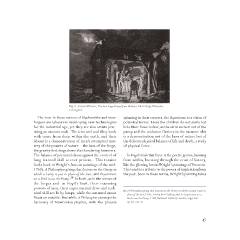
Fig. 9. JOSEPH WRIGHT, The Iron ForgeViewed from Without. Hermitage Museum,
Leningrad.

  The men in these scenes of blacksmiths and iron-         spinning in their courses, the Experiment is a vision of
forgers are labourers developing new technologies          potential terror. Here the children do not smile but
for the industrial age, yet they are also artists prac-    hide their faces in fear, as the air is sucked out of the
tising an ancient craft. The iron and coal they work       pump and the cockatoo flutters in the vacuum: this
with come from deep within the earth, and their            is a demonstration not of the laws of nature but of
labour is a demonstration of men’s attempted mas-          the delicate physical balance of life and death, a study
tery of the powers of nature – the heat of the forge,      of physical force.
the gravity that drags down the thundering hammers.
The balance of potential chaos against the control of        In Virgil’sTomb that force is the poetic genius, burning
long-learned skill is ever present. This tension           from within, bursting through the crust of history,
looks back to Wright’s famous paintings of the mid-        like the glowing lava inWright’s paintings ofVesuvius.
1760s, A Philosopher giving that Lecture on the Orrery in  The tomb is a tribute to the power of inspiration from
which a Lamp is put in place of the Sun, and Experiment    the past. Seen in these terms,Wright’s painting takes
on a Bird in an Air Pump.20 In both, as in the scenes of
the forges and in Virgil’s Tomb, their reasoning           20. A Philosopher giving that Lecture on the Orrery in which a Lamp is put in
powers of men, their experimental drive and tech-             place of the Sun,1766, Derby Art Gallery, and An Experiment on a
nical skill are lit by lamps, while the untamed moon          Bird in an Air Pump, 1768,National Gallery London. Egerton
floats on outside. But while A Philosopher conveys the        op.cit. cat. 21.
harmony of Newtonian physics, with the planets

                                                                             47

