


Page 67 - Vision & Ecstasy - Giovanni Benedetto Castiglione's St. Francis.
P. 67
seen as a continuous exploration of a single, larger theme. In

                             any event, the painting should be assigned to Castiglione’s last

                             years in Rome, 1650-51.35 Its especially complex synthesis,

                             relative restraint, and patient execution are certainly consistent

                             with that of paintings of characteristic subjects that are

                             convincingly dated to that same moment. Principal among these

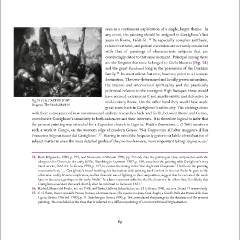
                             are the Diogenes that once belonged to Carlo Maratta (Fig. 24)

                             and the great Bacchanal long in the possession of the Durazzo

                             family.36 Its most salient features, however, point to a Genoese

                             destination. The over-determined and locally grown naturalism,

                             the intense and interiorized spirituality and the practically

                             polemical relation to the emergent High Baroque: these would

Fig.24 G.B. CASTIGLIONE      have seemed extraneous if not anachronistic and defensive in
Diogenes, The Prado,Madrid.  mid-century Rome. On the other hand they would have made
                             great sense back in Castiglione’s native city. The etchings alone

with their conveyance of new inventions and stylistic researches back-and-forth, between Rome and Genoa,

corroborate Castiglione’s sensitivity to both audiences and their interests. It is therefore logical to infer that

the present painting was intended for a Capuchin church in Liguria. Ratti’s Descrizione… (1766) mentions

such a work at Campi, on the western edge of modern Genoa: ‘Nei Cappuccini all’altar maggiore il San

Francesco Stigmatizzato dal Castiglione’.37 Bearing in mind the frequently generic or labile identification of

subject matter in even the most detailed guides of the pre-modern era, more important taking ‘stigmatizzato’

35. Both Brigstocke 1980, p. 293, and Newcome in Warsaw 1990, pp. 255-56, date the painting in close conjunction with the
     altarpiece for Osimo, to the early 1650s. Standring in La pittura 1987, p. 168, associates the painting with Castiglione’s very
     latest works, 1662-63. In Genoa 1990, p. 147, he revises the dating to the‘fine degli anni Cinquanta.’ His file on the painting
     comments first, ‘… Castiglione’s broad handling, his fascination with painting itself evident in the red flecks he gave to the
     otherwise ruddy brown complexion, and his dramatic sue of lighting in this composition, suggest that he executed the work
     later in his career, perhaps in the early 1660s.’ In a later comment added to the file, however, he offers that,‘it is likely that
     Castiglione executed this work shortly after he returned to Genoa in 1651.’

36. Madrid, Museo del Prado, inv. no. P-88, andTurin, Galleria Sabauda, inv. no. 551; Genoa 1990, cat. nos.16 and 17 respectively.
37. C. G. Ratti, Descrizione delle Pitture,Scolture,e Architetture ecc.Che trovansi in alcune Città,Borghi,e Castelli Delle due Riviere dello Stato

     Ligure, Genoa 1766 [ed.1780], p. 11. Standring in Genoa 1990, p. 146, introduced this passage to the discussion of the present
     painting. He concluded at the time that it referred to a different painting of a more traditional Stigmatisation.

                             69

