


Page 164 - The mystery of faith
P. 164
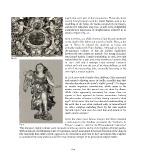
angels that were part of this commission. These also share
         several formal features with the Infant Baptist, such as the
         modelling of the limbs, the hands, particularly the fingers,
         and the feet with their long toes, as well as the delightfully
         contradictory impression of weightlessness achieved in so
         stocky a figure (Fig. 4).

Fig. 3b  Born in Utrera, as a child of seven, Gijón became orphaned
         on the death of his father and moved to Seville. Here, at the
         age of fifteen he entered the academy at Lonja and
         probably studied with Pedro Roldán. Although we have no
         documentary evidence of this the stylistic similarities
         between the two artists are notable. The young Francisco
         later joined Andrés Cansino’s workshop in 1669, but only
         trained there for a year and a few months as Cansino died
         in 1671. Still only a teenager Gijón married Cansino’s
         widow and took over the care of his three children, as well
         as all of his outstanding jobs, eventually becoming in his
         own right a master sculptor.

         In 1678, now with a family of six children, Gijón remarried
         and enjoyed a thriving career in Seville, a prolific time that
         Bernales describes as the artist’s ‘stable’ period’.2 He began
         to receive important commissions, which attest to his
         artistic success, but this period was cut short by illness.
         While Gijón apparently recovered, his career does not
         appear to have regained its former momentum. Indeed,
         Bernales makes reference to Gijón having entered a ‘dark
         ages’3 in his career that later so obscured understanding of
         his work that it was often confused with, or misattributed
         to, other sculptors including those by his own nephew
         Bernard Gijón,4 and even the exact date and details of his
         death remain unclear.5

                                                                   By far the artist’s most famous image is the Christ Crucified
                                                                   – nicknamed in the Sevillian vernacular the ‘Cachorro de
         Fig. 4 Triana’ – made in 1682 for the Hermandad de Cachorro.6
         This dramatic, highly realistic work measures nearly two metres and is of the highest technical quality.
         With its almost overwhelming sense of expression, superb anatomical detail and depiction of the drapery
         (the loincloth) that, while carved, appears to be actual linen and even to have movement, this sculpture
         is considered by many authors to be the most moving example of its period and subject matter.

         164

