


Page 168 - The mystery of faith
P. 168
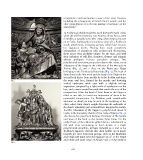
composition and incorporates many of the same features,
                                                                   including the arrangement of Saint’s Anne’s mantle, and the
                                                                   clear transcription of a relevant passage of scripture on the
                                                                   open book.6

                                                                   La Roldana probably made this work during the early 1680s
                                                                   when she and her husband, Luis Antonio de los Arcos, were
                                                                   in Seville, or possibly even after 1684, when they had moved
                                                                   on to Cadiz. Stylistically it is similar to some of La Roldana’s
                                                                   small, polychrome, terracotta groups, which later became
                                                                   her signature works. Having been made completely
                                                                   independent of altarpieces with architectural decorations,
                                                                   these pieces were probably unique for the time, and with
                                                                   their inclusion of still lifes, furniture, flowers and animals
                                                                   almost prefigure Rococo porcelain groups. Two
                                                                   polychromed terracotta groups that date to the 1680s are an
                                                                   Education of the Virgin in the collection of the Marqués de
                                                                   Perinat (Fig. 2), and a Rest on the Flight into Egypt
                                                                   belonging to the Condesa de Ruiseñada (Fig. 3). The head of
                                                                   Saint Anne in the first work and the head of the Virgin in the
                                                                   second both derive from models by Pedro Roldán and share
Fig. 1 the same oval face, framed by the mantle and featuring
                                                                   arched eyebrows, wide eyes with a slightly serious
                                                                   expression, tempered by a light smile of satisfaction on the
                                                                   lips, and a centre-parted hairstyle that marks the axis of the
                                                                   composition. Often the head of Saint Anne or the Virgin is
                                                                   tilted to one side, to avoid any impression of stasis in the
                                                                   pyramidal composition. La Roldana paid considerable
                                                                   attention to detail, as may be seen in the sculpting of the
                                                                   chair, where Saint Anne’s weight depresses the underside of
                                                                   the chair’s upholstery just as would have happened in reality.
                                                                   Another Education of the Virgin in polychromed wood in
                                                                   Cadiz, in the monastery church of Our Lady of Mercy (Fig. 4),
                                                                   also shows the same facial features, treatment of the mantle
                                                                   and pose of the head as the present Saint Anne. On the
                                                                   arched back of the elaborate gilded throne, upholstered in
                                                                   red with arms terminating in lion’s heads, is a single
                                                                   polychromed seraphim, perhaps included as a nod to La
                                                                   Roldana’s signature cherubs that often bubble up en masse
                                                                   beneath her later terracotta groups, such as the Madonna
                                                                   and Child with Saint John the Baptist (1692),7 or the Virgin
                                                                   and Child with Saint Diego of Alcalá,8 and a Holy Family in

Fig. 2

                                                                            168

