


Page 170 - The mystery of faith
P. 170
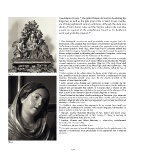
Fig. 3  Guadalajara (1692).9 The gilded foliate decoration bordering the
Fig. 4  draperies, as well as the pale green tints in Saint Anne’s mantle,
        are all later eighteenth-century additions, although the deep rose
        shade of Saint Anne’s robe and the Virgin’s white robe and blue
        mantle are typical of the polychromy found in La Roldana’s
        work and probably original.10

        1 This theological current met with particularly active support from the
        Dominicans, who accepted that since Mary’s very existence was predicated by
        God’s decision to make his only Son incarnate, her immaculate state of grace
        was beyond question. Until 1854, when Pope Pius IX solemnly defined this
        elective belief as dogma, Spanish Baroque art was the foremost showcase for
        Marian subjects related to defending the Immaculate Conception, and among
        the most popular subjects was the Education of the Virgin.
        2 Luke 1:35. As taken from the Clementine Vulgate Bible, the entire text reads:
        ‘Spiritus Sanctus superveniet in te, et virtus Altissimi obumbrabit tibi. Ideoque
        et quod nascetur ex te sanctum, vocabitur Filius Dei’ (The Holy Ghost shall
        come upon thee and the power of the Most High shall overshadow thee. And
        therefore also the Holy that shall be born of thee shall be called the Son of
        God).
        3 Other versions of the subject place the figure of the Virgin on a separate
        base, possibly to stress her unique purpose, as seen in a version made by Juan
        Martínez Montañés around 1627–1630 for the church attached to the
        Convent of Saint Anne in Seville.
        4 Later, around 1679 Roldán was contracted to make a retablo for the
        Carmelite Descalzes Convent of Santo Ángel de la Guarda in Seville. While the
        contract did not stipulate this subject, it is known that a version of The
        Education of the Virgin was included in the central part of the altarpiece. This
        work is now in the convent’s Church of Santo Ángel de la Guarda.
        5 Luisa Roldán left her father’s Seville workshop in December 1671 when she
        married Luis Antonio de los Arcos and moved first to Seville and Cadiz, before
        settling in Madrid, where she was later appointed court sculptor (escultora de
        cámara) to Charles II in 1692.
        6 In Roldán’s 1670 version, this appears to be an excerpt from Isaiah 9:2
        (Populus qui ambulabat in tenebris, vidit lucem magnam; habitantibus in
        regione umbræ mortis, lux orta est eis).
        7 Chicago, Loyola University Museum of Art, signed and dated 1692,
        terracotta with polychromy, gift of Mrs George C. Stacy in memory of
        William and Elizabeth Kehl, inv. no. 5-78.
        8 London, Victoria and Albert Museum, c. 1690–1695, polychromed
        terracotta, inv. no. 250-1864.
        9 Guadalajara, Museo des Bellas Artes.
        10 It is quite common in Spanish Baroque sculpture for the polychromy to be
        updated or modernized, most particularly in the eighteenth and nineteenth
        centuries.

                       170

