


Page 176 - The mystery of faith
P. 176
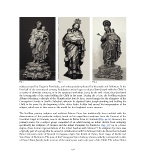
Fig. 1  Fig. 2       Fig. 3

subject created by Gregorio Fernández, and subsequently replicated by his pupils and followers. In the
first half of the seventeenth century, Andalusian artists began to depict Saint Joseph with the Child in
a variety of domestic contexts, or in the carpentry workshop. Later, by the mid 1600s, they developed
the iconography of the saint holding the Child in his arms. During the 1650s, the Sevillian sculptor
Alfonso Martínez, a disciple of the Flemish artist José de Arce, carved images for the altarpiece of the
Concepción Grande in Seville Cathedral, wherein he depicted Saint Joseph standing and holding the
Child in his arms. By the beginning of the 1660s Pedro Roldán had carved his interpretation of the
subject, which was to later serve as the model for his daughter’s iconic versions.

The Sevillian painter, sculptor and architect Alonso Cano has traditionally been credited with the
dissemination of this particular subject, based on his magnificent sculpture from the Convent of the
Guardian Angel in Granada, now in the Museo de Bellas Artes in Granada (Figs. 4a, b). However, the
primary source for a subject group comprised of an adult bearing an infant derives from antiquity,
specifically the sculpture of Hermes and the infant Dionysius by Praxiteles (Fig. 5),8 or, to a lesser
degree, those Roman representations of the infant Bacchus with Silenus.9 The sculpture by Cano was
originally part of a group that he carved in collaboration with his follower Pedro de Mena that included
three Franciscan saints of Spanish–Portuguese origin: San Antón of Padua, Saint Diego of Alcalá and
Saint Peter of Alcántara. The pose of the Portuguese Saint Anthony almost perfectly corresponds to that
of Cano’s Saint Joseph, both in terms of the saint’s pose and in the pose of the Child. The infant Christ

                176

