


Page 178 - The mystery of faith
P. 178
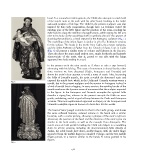
hand. In a somewhat restless gesture, the Child also attempts to catch hold
                                              of the saint’s tunic at the neck with his other hand, resulting in the rather
                                              awkward position of his legs. The Child in the present sculpture was also
                                              inspired by this early composition, though here, La Roldana varied the
                                              twisting pose of the little figure and the position of the arms, reaching his
                                              right hand to clasp the neckline of Joseph’s tunic, while resting his left arm
                                              next to his body on the swaddling cloth or symbolic shroud. This gesture of
                                              clutching the neckline is a detail repeated in the Antequera sculpture (Fig. 1).
                                              The modelling of the infant figure is similar in all of La Roldana’s versions
                                              for the subject. The heads in the works from Cadiz, the present sculpture,
                                              and the Saint Anthony of Padua from the Church of Santa Cruz in Cadiz
                                              (Fig. 6) all possess a similar sense of volume and litheness in the features.
                                              They also share the same small sunken eyes, ample foreheads and hairstyle
                                              characteristic of the artist, that is, parted to one side with the fringe
                                              separated into locks ending in a curl.

                                              In the present work the saint stands as if about to take a step forward,
                                              advancing with his left leg. This sense of movement is shared by the other
                                              three versions we have discussed (Cadiz, Antequera and Granada) and
                                              shows the artist’s clear attempt to avoid a sense of stasis. Also, by parting
                                              the folds of Joseph’s mantle, the artist revealed the shortened tunic and
Fig. 6 exposed the saint’s foot, which in the Cadiz and Granada versions wears a
                                              sandal, but in the present sculpture and the version in Antequera is shod in
                                              a kind of sandal-boot or legging. In every version, the swirling border of the
                                              mantle reinforces the dynamic sense of movement that the sculptor imparted
                                              to the figure. In the Antequera and Granada examples the agitated folds
                                              describe a zigzag line, whereas in the present example the folds are more
                                              gentle, undulating, and of a type half-way between the Cadiz and Antequera
                                              versions. This more sophisticated approach to drapery of the Antequera and
                                              Granada examples argues in favour of a later date for the works.

                                              The head of Saint Joseph is similar to that in the Cadiz group, and shows
                                              the same softened features, reduced volume in the beard and a similar
                                              hairstyle, with a centre parting, allowing a glimpse of the saint’s right ear.
                                              Moreover, the position of the head and the direction of the saint’s gaze are
                                              similar in the both works, as well as the example from Antequera. The
                                              saint’s arms are held parallel cradling the Child who fidgets in a swaddling
                                              cloth. In all the versions, including the aforementioned Saint Antony of
                                              Padua, the adult hands have short, stubby fingers, with the index finger
                                              separated from the middle finger in a marked V shape, and the two middle
                                              fingers joined, in a manner similar to the hands El Greco painted in his
                                              figures.

Fig. 7

                                                                            178

