


Page 177 - The mystery of faith
P. 177
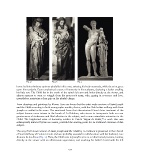
Fig. 4a  Fig. 4b       Fig. 5

borne by Saint Anthony squirms playfully in his arms, twisting his body outwards, while the saint gazes
upon him tenderly. Cano emphasized a sense of humanity in his sculpture, depicting a father cradling
his little son. The Child lies in the crook of the saint’s left arm and looks directly at the viewer, and
almost appears to want to wriggle from his protector’s arms, who, gazing in reverence and love,
nevertheless maintains a firm grip on his playful charge.

From drawings and paintings by Alonso Cano we know that the artist made versions of Saint Joseph
and the Child according to both iconographic models, that is, with the Child either walking with Saint
Joseph or cradled in his arms. The emotional focus that characterized Cano’s later treatment of the
subject became more intense in the hands of La Roldana, who strove to incorporate both an even
greater sense of tenderness and filial affection in the subject, and a more naturalistic animation in the
Child. The heightened sense of humanity evident in Cano’s Virgen de Belén,10 a work that was
subsequently imitated by his successors, provided the starting point for La Roldana’s versions of this
subject.

The very first known version of Saint Joseph and the Child by La Roldana is preserved in the Church
of Saint Anthony of Padua in Cadiz and was probably executed in collaboration with her husband, Luis
Antonio de los Arcos (Fig. 2). Here, the Child rests in Joseph’s arms in a rather forced position, looking
directly at the viewer with an affectionate appearance, and touching his father’s beard with his left

                  177

