


Page 185 - The mystery of faith
P. 185
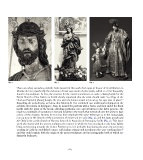
Fig. 3  Fig. 4       Fig. 5

        There are other, secondary, stylistic traits present in this work that argue in favour of its attribution to
        Montes de Oca, specifically the inclusion of inset eyes made of glass paste, which is a trait frequently
        found in his sculpture. In fact, the contract for the artist’s commission to make a Saint Joseph for the
        Parish Church of San Isidoro in Seville clearly stipulated that the artist should make ‘an effigy of the
        Glorious Patriarch [Saint] Joseph, life size with the Infant seated in his arms, his eyes also of glass’.7
        Regarding the polychromy, we know that Montes de Oca combined two traditional techniques in the
        estofado decoration of his figures. First, he incised the patterns with a burin, and then added the floral
        motifs with the point of the brush, affording particular care and attention to the latter process. The
        result is a multitude of variations in line and tonality in the motifs that extend all over the uniform base
        colour of the drapery. Montes de Oca has here employed the same technique as in the Inmaculada
        (1719), now in the Church of the Conversion of Saint Paul in Cadiz (Fig. 4), and the Saint Joseph and
        the Child in the parish church of Nuestra Señor de la Asunción de Bormujos, Seville (Fig. 5). This latter
        work also shares with the present sculpture, the manner in which the feet are placed on the base: lightly
        lifted and pointing towards the viewer. Furthermore, it is probable that during the years the artist was
        working in Cadiz he established contact with Italian artisans and merchants who were working there,8
        and this could explain both the origin of the present sculpture and its iconography, both of which are
        distinctly Italianate.

                185

