


Page 182 - The mystery of faith
P. 182
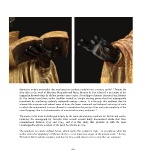
distinctive artistic personality that was based on aesthetic models from a century earlier’.2 Despite his
clear debt to the work of Martínez Montañés and Mesa, Montes de Oca achieved a true sense of the
original in his work since he did not produce mere copies. According to Antonio Torrejón Díaz, Montes
de Oca instead used these earlier Sevillian models as ‘simple starting points that [he] subsequently
transforms by combining evidently eighteenth-century criteria. It is through this synthesis that he
achieved the exquisite and refined sense of form, the linear command and technical virtuosity of scale
in which the monumental is never allowed to overshadow the purity of line and calm simplicity of the
visual language that is so characteristic of seventeenth-century sculpture’.3

The study of this artist is challenged largely by the scant documentary evidence for his life and works.
However, the monograph by Torrejón Díaz records around thirty documented works that were
commissioned between 1719 and 1745, and it is this study that provides us with the most
knowledgeable stylistic analysis of the work by Montes de Oca.

The emphasis on clearly defined forms, which marks this sculptor’s style – to paraphrase what the
author terms the ‘grafismos’ of Montes de Oca – is an important aspect of the present work. 4 In fact,
Torrejón’s Díaz’s stylistic analysis, read line for line, could almost serve to describe our sculpture:

                                                                 182

