


Page 194 - The mystery of faith
P. 194
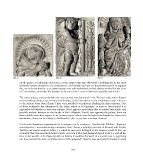
Fig. 2a  Fig. 2b       Fig. 2c

         on the palace at Peñaranda del Duero, as the entire town was effectively a building site in the early
         sixteenth century devoted to its construction. And though we have no documented proof to support
         this, we do know that by 1530, when Bigarny was well established, he had already worked for the Prior
         of Covarrubias, and either the brother or the son of the Count of Miranda, possibly even both.5

         The entire palace, and particularly the main portal, was decorated in the ‘Roman’ style, with pilasters
         covered with garlands, laurel crowns and heralds, and an inscription on the entablature made reference
         to the ancient busts from Clunia. These were installed over pilasters flanking the main entrance. One
         of these sculptures has disappeared; the other, which is of limestone, is now so deteriorated it is
         impossible tell whether it was even antique. But it appears most likely that its subject was noble, and
         possibly ancient, because on the facade of the Collegiate Church, just opposite the palace, there are
         three marble busts that appear to be Roman copies, which were brought from Naples by Francisco’s
         descendent, Don Juan de Zúñiga y Avellaneda (1586–1595) who was then Viceroy.6

         In his work Ingeniosa comparación de lo antiguo con lo moderno,7 Cristóbal de Villalón – Bigarny’s
         contemporary – recounted seeing a sculpture from Clunia, a porphyry portrait of Brutus’s wife Portia,
         ‘held by our master sculptor Felipe [...] which he says once belonged to the emperor, made of the type
         of marble that few men know how to work, not even if they had diamond tipped tools [...] and all the
         time in the world [...] he [Bigarny] did not believe it could be the work of a mortal man [...] pointing
         out how natural the veins, wrinkles and so forth appeared’. Bigarny was particularly shrewd in using

                  194

