


Page 219 - The mystery of faith
P. 219
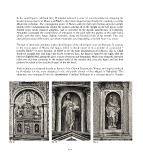
In the small figures exhibited here, Fernández achieved a sense of monumentality by wrapping the
         slender sinuous figures of Moses and Elijah in their thick draperies (specifically the mantles), a notably
         Mannerist technique. The contrapposto stance of Moses, with the right arm leaning upon the upright
         tablets of the Commandments, relaxes the posture, placing all of the weight on the left leg in a pose
         derived from Greek classical sculpture, and is evocative of the Apollo Sauróktonos of Praxiteles.
         Fernández contrasted the overall sense of relaxation in the pose with the gesture of the right hand,
         which, with the index finger slightly extended, clasps the bunched folds of his mantle. This very
         characteristic pose of the hand, one which Fernández used repeatedly, is derived from ‘Los Leoni’.

         The lack of distinctive attributes makes identification of the other figure more problematic. In contrast
         to the serene aspect of Moses, this figure, which is clearly meant to be a prophet or a patriarch –
         possibly Elijah4 – is more dynamic. In Elijah we see the same physiognomy as in Moses, that is, a high
         forehead, straight nose and long curly beard. However, here, the figure is turned to the right, with the
         left foot slightly lifted, giving the piece a sense of torsion and dynamism, which runs along the extended
         right arm and then continues in the twisted folds of the mantles that cross the figure and are then
         gathered bunched in the clenched fingers of the left hand.

         Both sculptures correspond loosely to figures of the Church Doctors, the Virtues and angels produced
         by Fernández for the main altarpiece in the old parish church of San Miguel in Valladolid. This
         altarpiece was contracted from the ensemblador Cristóbal Velázquez in a contract dated 6 October

Fig. 1a  Fig. 1b       Fig. 1c

                  219

