


Page 221 - The mystery of faith
P. 221
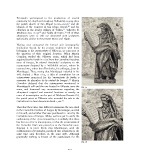
Fernández participated in the production of several
ostensoria for churches throughout Valladolid, among them
the parish church of San Miguel (1606–1607),9 and the
Church of the Convent of San Diego (1606),10 and for
churches in the nearby villages of Velliza,11 Villaveta de
Medina (1609–1613)12 and Tudela de Duero.13 All of these
altarpieces were or still are decorated with sculptures
stylistically similar to the present Moses and Elijah.

Having now compared the formal and iconographic               Fig. 3a
similarities shared by the present sculptures with those
belonging to the ostensorium of Villaveta, we turn now to
the question of their original location. When Martín
González studied the Villaveta series, which had been
acquired by the Parish in 1626 from the Carmelite Descalzes
nuns of Burgos, he related Fernández’ sculptures to the
ostensorium designed by a ‘Valladolid artisan’, whom he
assumed was, rather than Fernández, his colleague, Juan de
Muniátegui. Then, noting that Muniátegui included in his
will, drafted 7 May 1612, a debt of completion for an
ostensorium contracted for the ‘monasterio de frailes y
convento de descalços de la ciudad de burgos’,14 Martín
González deduced that the ostensorium mentioned in
Muniátegui’s will and the one located in Villaveta were the
same, and dismissed any inconsistencies regarding the
altarpiece’s original and eventual locations as merely an
error of transcription on the part of Ildefonso Francés Gil,
the parish priest at Villaveta who recorded the sale to the
Carmelites in a later document dated 1702.15

Therefore there were two different ostensoria: the one owed
to the Carmelite Brothers of Burgos by Muniátegui, as cited
in his will, and another that was purchased in 1626 by the
Carmelite nuns of Burgos. While, we have yet to verify the
authenticity of the 1702 manuscript, it is unlikely that there
has been an error in transcription, or that the ostensorium of
the Carmelite friars was passed on to the Carmelite nuns.
Instead, it is more likely that Muniátegui, with the
collaboration of Fernández, produced two ostensoria at the
same time and, therefore, in the same style. Although
practically nothing is known of the ostensorium for the

                                                                                                              Fig. 3b

221

