


Page 231 - The mystery of faith
P. 231
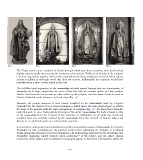
Fig. 1  Fig. 2  Fig. 3  Fig. 4

        The Virgin stands upon a pedestal of clouds through which peep three seraphim, their heads placed
        slightly asymmetrically thus creating the impression of movement. Visible on both sides of the sculpture
        is an iron ring, which, together with another originally on the back, would have served to hold a radiant
        aureole in gilded or silver-gilt wood that does not survive. Additionally the sculpture would have
        probably worn a silver crown, which is also lost.

        The childlike facial expression of the Inmaculada included several features that are characteristic of
        Fernández de la Vega, particularly the curve of the face with its rounded cheeks and firm jawline.
        Similar facial features can be seen in other works by the sculptor, such the Santa Teresa de Jesús in
        Oviedo Cathedral, made between 1658 and 1659 (Fig. 1).5

        However, the present sculpture is most closely modelled on the Inmaculada made by Gregorio
        Fernández for the Church of Vera Cruz in Salamanca, which shares the same elevated gaze, as well as
        the form of the pedestal with the same arrangement of seraphim (Fig. 2).6 We know that Fernández
        made this work in 1620, fusing details from two of his earlier Inmaculadas: the body is based on that
        of the Inmaculada from the Convent of San Francisco in Valladolid (1617)7 while the clouds and
        seraphim base was probably inspired by the Inmaculada from the Convent of Nuestra Señora del
        Abrojo (c. 1617);8 both works are unfortunately now lost.

        It is, therefore, with good reason that Martín González structured his study of Inmaculadas by Gregorio
        Fernández by first examining the documented works before addressing the problem of attributed
        works, giving third priority to rejected attributions. His methodology was based on the knowledge that
        Fernández’ workshop tended towards ‘serial production’9 of the subject, and the artist’s various
        treatments of this subject and its attendant iconography appear to have been inexhaustible. While the

                231

