


Page 226 - The mystery of faith
P. 226
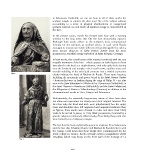
Fig. 1                in Salamanca Cathedral, we can see how in all of these works the
              Fig. 2  sculptor sought to capture the deep inner life of the subject without
                      succumbing to a sense of physical abandonment or exaggerated
                      gestures. Instead, in each work all spiritual energy is concentrated in
                      the face.

                      In the present works, Rueda has formed each bust with a twisting
                      rotation to the long necks that tilts the face dramatically upward.
                      Although both works adhere to the sculptor’s basic compositional
                      formula for the spiritual, as outlined above, in each work Rueda
                      managed to incorporate subtle differences that distinguish the calmer,
                      more mature character of Saint Francis Xavier from the more
                      spontaneous, youthful energy embodied in Saint Aloysius Gonzaga.

                      In both works, this overall sense of the mystical combined with the very
                      tangible treatment of the hair – which appears in both figures to have
                      been glued to the head as a single element, with only spiky locks issuing
                      over the forehead and temples – the broad brows, aquiline noses and
                      overall modelling of the soft facial contours into a wistful expression
                      clearly indicate the hand of Esteban de Rueda. These same features,
                      including the moustache and goatee beard in the Saint Francis Xavier
                      – features that were in fashion during the reign of Philip IV – are also
                      seen in the Saint Sebastian in Villalar de los Comuneros (Valladolid), in
                      the Saint Thyrsus in Benafarces (Valladolid), and the Saint Eulalia and
                      the Allegories of Virtue in Villardondiego (Zamora), in addition to the
                      aforementioned works in Toro, Alaejos and Salamanca.

                      Unfortunately, the essentially fragmentary nature of these busts does
                      not allow us to speculate too closely as to their original function. The
                      fact that only the head and neck were polychromed, but the upper
                      torso and shoulders were left ungessoed and unpainted indicates that,
                      as figures, these works were dressed in robes and were most likely
                      made to be carried in pasos, or Holy Week processions, mounted by a
                      specific religious community. Alternatively, if less likely, they could also
                      have formed part of reliquary images.

                      The fact that the busts stylistically appear to originate from Salamanca,
                      and the fact that Sebastian Ducete and Esteban de Rueda kept in with
                      the Jesuits, could mean that these works were commissioned for the
                      Jesuit college in Tormes. Rueda actually carved a magnificent Christ
                      Crucified, which now hangs on the front wall of the transept of La

                                             226

