


Page 241 - The mystery of faith
P. 241
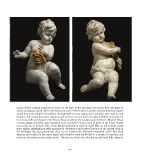
traces of their original attachment remain on the back of the shoulders. Moreover, their attributes of
wheat and grapes, which refer to the bread and wine of the Eucharist, further indicate that these figures
would have been winged. Throughout the eighteenth century angels, putti and genii were used in both
religious and secular decorative schemes, and we have many similar examples by Michel conserved in
the rooms, halls and chapels of the Palacio Real, as well as other palaces and churches in Madrid. Many
of these angels, cherubim, putti and genii were executed in stucco, such as those in the Royal Chapel
(1754; Fig. 2), or in stone (Fig. 3) but Michel preferred to work in wood (Fig. 4). All of these works
share similar physiognomy, with pronounced cheekbones and marked features in the mouth, such as
the full lower lip, and pronounced chin, not to mention the distinctive treatment of the hair. Such
features are included in the many angels and cherubim made by Michel in a variety of materials, and
these are all evident in the present works. The figures, which are solid, but graceful and fully infantile,

                                                                 241

