


Page 25 - Luca Giordano - Liberation of St Peter
P. 25
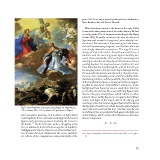
Fig. 8. LUCA GIORDANO, St Januarius interceding for the PlagueVictims.  pose of St Peter, in pictures by such artists as Lanfranco,
Oil on canvas, 400 x 315 cm. Museo di Capodimonte, Naples.              Sisto Badalocchio and Pietro Novelli.

and naturalistic painting, rich in effects of light which                  When Giordano turned to the theme in the early 1660s
recall Raphael’s fresco, and with startlingly foreshortened             it was with a sharp awareness of its earlier history. He had
figures and expressive gestures involving the viewer in                 recently painted the St Januarius interceding for the Plague
the drama.23 His St Peter, just woken, struggling to his                Victims, (Fig. 8) and he returns to the idea of a frieze of
feet, is ultimately derived from an apostle in Raphael’s                figures spread across the foreground, some sharply fore-
Transfiguration (Vatican, Pinacoteca). Domenichino’s pic-               shortened. But whereas in that painting he links heaven
ture became the locus classicus for the scene, and there                and earth by a sweeping diagonal, now Giordano attempts
are echoes of the composition, and particularly of the                  a strikingly classical composition. The angel forms a
                                                                        strong vertical at the centre, framed by an oval frieze of
                                                                        soldiers, with the two foreground figures carefully bal-
                                                                        anced, their poses similar, their earthy browns and greens
                                                                        echoing one another, and the play of reflections on armour
                                                                        evoking Raphael. He may have known Galle’s print, and
                                                                        from this taken the view through the arch on the left, and
                                                                        the hanging lantern, but his rendering is distinguished by
                                                                        its compositional balance and symmetry. Giordano’s con-
                                                                        tours are here unusually precise, and the solidity of the
                                                                        slumbering soldiers, and the powerful, direct naturalism
                                                                        of the foreshortened pose, so strong and relaxed, suggest-
                                                                        ing that he also knew Domenichino’s altarpiece. In the
                                                                        background two bound prisoners await their fate (see
                                                                        p.25); they derive from the many suffering figures who
                                                                        observe the gory martyrdoms which Ribera so often
                                                                        painted.These earthly figures are set against the brilliant
                                                                        colour and light of the angel, where the daring and
                                                                        ravishing colour harmonies suggest that he had looked at
                                                                        the late style of Guido Reni, whose Adoration of the Shepherds
                                                                        was in the Certosa di San Martino. Giordano sets the soft
                                                                        modelling of the very palpable flesh against the lightness
                                                                        of the drapery, which, as the colour bleeds out, becomes
                                                                        almost transparent.

                                                                                         lll

                                                                        23. R. Spear, Domenichino, New Haven and London 1982, cat. II, plate
                                                                           14.

                                                                        23

