


Page 33 - Vision & Ecstasy - Giovanni Benedetto Castiglione's St. Francis.
P. 33
the Jesuits, the most influential of the new orders, devoted themselves
to acts of charity, but their worldly activity was balanced by an eremitic
strain, and a burning piety. At the centre of their identity lay an
insistence on the power of solitary prayer, and they meditated daily,
desiring a mystic union with God through an ardent life in prayer. As
St Ignatius of Loyala had taught in his Spiritual Exercises, they sought to
imagine the divine mysteries before their eyes, weeping and sighing as
they visualised the Passion of Christ or the sorrows of Mary. St Ignatius
had recommended meditation on death, and the contemplation of the
skull, the symbol of vanity; he exhorted the exercitant not to dwell on
joy and gladness, or on anything that might hinder his shedding tears
for his sins, but to grieve and feel pain, and to bring to mind Death and
Judgment. With the skull went the rosary, which had been added to
Franciscan devotions in 1422. In his Practice of Mental Prayer, the most
famous of many such manuals, Matteo da Salò recommended the use
of devotional images,‘some picture both devout and fair, before which
we do our reverences…I say fair, for objects do soonest stir up the
affections of the mind’.5

   Around the turn of the century artists created a new image of St
Francis as the powerful exemplar of the devotional practices of the
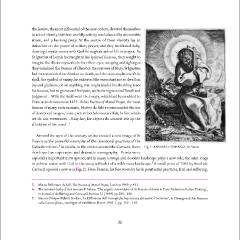
Catholic reform.6 In Emilia, in the circles around the Carracci, there Fig. 2. ANNIBALE CARACCI, St Francis
developed an expressive and dramatic iconography. Prints were
especially important in its spread, and in many a savage and desolate landscape plays a new role; the saint longs
to achieve union with God in the stony solitudes of a wilderness landscape.7 A small print of 1585 by Annibale
Carracci opened a new era (Fig.2). Here Francis, his face worn by harsh penitential practices, frail and suffering,

5. Mattia Bellintani da Salò The Practice of Mental Prayer, London 1969, p.433
6. The seminal study of this remains P.Askew,‘The angelic consolation of St Francis of Assisi in Post-Tridentine Italian Painting’,

     in Journal of theWarburg and Courtauld Institute 32 (1969) pp.280 - 306
7. Simone ProsperiValenti Rodino,‘La Diffusione dell’iconografia francescana attraverso l’incisione’, in L’Immagine di San Francesco

     nella Controriforma, catalogue of exhibition, Rome 1982-3, pp. 159 – 169.

                                                  35

