


Page 37 - Vision & Ecstasy - Giovanni Benedetto Castiglione's St. Francis.
P. 37
art of austere clarity and directness.13 Opposite the Crucifixion was
St Francis receiving the Stigmata, and on the high altar was Giovanni
Battista Paggi’s Immaculate Conception, a subject very frequently
represented in Capuchin churches. Here theVirgin, with crescent
moon and stars, and severely frontal, intercedes for the city, shown
against a stormy sky.14

   This severe, early Catholic Reformation art was to be enriched
as Genoa, in the early 17th century, became a dynamic artistic

centre, where the opportunities created by wealthy patrons

attracted many foreign artists. Marcantonio Doria was a patron

of both Caravaggio and Caracciolo, and Rubens’ two altarpieces

for the Gesù, The Circumcision (1605) and St Ignatius healing a

possessed woman, (1620; in sitù) introduced both brilliant colour

and a warm and passionate language of gesture and expression.

AnthonyVan Dyck was based in Genoa in the 1620s, and, side by

side with his sumptuous portraits of the aristocracy, icons of

wealth and display, he introduced a passionate religious art. His

Crucifixion (1627; Museo di Palazzo Reale, Genoa) sets the Cross

against a darkened sky and desolate landscape; in the Francesco

Orero in adoration of Christ on the Cross with St Francis and St Bernard

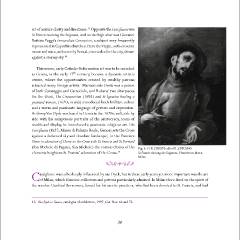
(San Michele di Pagana, San Michele) the cosmic drama of the Fig. 6. G.B.CRESPI called IL CERANO

elements heightens St Francis’ adoration of the Cross.15                    St Francis showing the Stigmata, Pinacoteca Brera,

                                                                            Milan

678

Castiglione was to be deeply influenced by van Dyck, but in these early years yet more important was the art
     of Milan, which Genoese collectors and patrons particularly admired. In Milan there lived on the spirit of
the sombre Cardinal Borromeo, famed for his ascetic practices, who had been devoted to St Francis, and had

15. Van Dyck in Genoa, catalogue of exhibition, 1997, Cat. Nos. 66 and 72.

39

