


Page 201 - The mystery of faith
P. 201
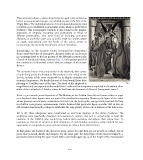
This particular subject – always depicted as the aged saints embracing
before a monumental city gate – is included as part of the Life of the
Virgin Mary. The individual scenes of reconstituted altarpieces tend
to follow a pre-established iconographic order, which is medieval in
tradition. This iconographic formula is also found in the graphic
depictions of religious narratives and particularly in those of
Flemish printmakers, who were fond of including anecdotal
elements, in much the same way as in this relief by Giralte, where
an angel, approaching over the heads of the saints, serves to
communicate the heavenly benediction of their betrothal.

Interestingly, on this occasion Giralte borrowed his composition
from a work by Pedro de Berruguete, Alonso’s father, as can be seen
in a painting dated to the last quarter of the fifteenth century in the
Church of Paredes de Nava, Palencia (Fig. 1). Even greater proof of
this connection is illustrated in the Palencian subjects of his master
Alonso.

The narrative focus of the composition is the shepherd, who carries                                           Fig. 1
a lamb slung across his shoulders. His position in the relief, on the
far left, is made all the more noticeable by its slightly unstable and
truncated impression. No doubt this sort of detail would have been
pleasing to Castillian eyes of the time. The head of the shepherd is
magnificent and corresponds to the model that Giralte and his companions explored in the walnut choir
stalls of the Cathedral of Toledo, where he had been the foreman of Alonso’s Berruguete’s team.3

From 1550 onwards, most depictions of The Meeting at the Golden Gate did not feature either an angel
or a shepherd: these figures were not part of the standard iconography. However, the figure of the maid,
whose presence as witness is consistently referred to in the Apocrypha, was generally retained. Perhaps
in a bid for even greater expressiveness, Giralte depicted this particular figure as rather old, in fact, as
old as Saint Anne herself, perhaps to symbolize the sage gravity of her role as witness of the holy scene.

All in all, these altarpieces were constructed as enormous stagings of the divine mysteries. The
sculptures were specifically designed and executed to capture and, just as importantly, to hold the
attention of the faithful, who would pray before them everyday, throughout their entire lives. To
maintain an element of surprise in their depictions of such familiar narratives, artists looked for new
approaches to composition, pose and expressions to enliven these sacred scenes.

At first glance the bodies of the characters seem curious because they are not treated as a whole, but as
parts: that is, heads, hands and drapery. For the most part, the facial types derive from Berruguete, a
particular feature being the open mouth with a very high upper lip, as in the Angel of the Anunciación

201

