


Page 19 - Jacobello del Fiore - His Oeuvre and a Sumptuous Crucifixion
P. 19
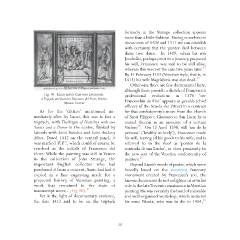
Fig. 10 - EIGHTEENTH CENTURY ENGRAVER:                   formerly in the Strange collection appears
     A Triptych attributed to Francesco del Fiore, Venice,      more than a little dubious. Basing ourselves on
                                                                documents of 1409 and 1411 we can establish
                       Museo Correr                             with certainty that the painter died between
                                                                these two dates. In 1409, when his son
   As for the ‘dittico’ mentioned im-                           Jacobello, perhaps prior to a journey, prepared
mediately after by Lanzi, this was in fact a                    his will, Francesco was said to be still alive,
triptych, with The Virgin of Humility with two                  whereas this was not the case two years later.22
Saints and a Donor in the centre, flanked by                    By 14 February 1414 (Venetian style, that is, in
laterals with Saint Benedict and Saint Anthony                  1415) his wife Magdaluzia was also dead.23
Abbot. Dated 1412 on the central panel, it
was marked ‘F. F.’, which could of course be                       Otherwise there are few documented facts,
resolved as the initials of Francesco del                       although these provide a sketch of Francesco’s
Fiore. While the painting was still in Venice                   professional evolution: in 1376 ‘ser
in the collection of John Strange, the                          Franceschin de Fior’ appears as gastaldo (chief
important English collector who had                             officer) of the Scuola dei Pittori in a contract
purchased it from a convent, Sasso had had it                   for that confraternity’s move from the church
copied in a line engraving made for a                           of Santi Filippo e Giacomo to San Luca; he is
projected history of Venetian painting, a                       named therein as an associate of a certain
work that remained in the state of                              Vielmo24. On 12 April 1398, still ‘san de la
manuscript notes - ( Fig. 10).21                                persona’ (‘healthy in body’), Francesco made
                                                                his will, leaving all his goods to his wife, and is
   Yet in the light of documentary evidence,                    referred to in the deed as ‘pentor de la
the date 1412 said to be on the triptych                        contrada di san Lucha’, in close proximity to
                                                                the new seat of the Venetian confraternity of
                                                                painters.25

                                                                   Beyond Lanzi’s words of praise, which were
                                                                broadly based on the surviving funerary
                                                                monument erected by Francesco’s son, the
                                                                known documents do not enlighten us as to his
                                                                role in the lateTrecento renaissance inVenetian
                                                                painting. He was certainly the head of a sizeable
                                                                and well-organised workshop, which included
                                                                his sons: Nicola, who was to die in 1404,26

                                                            20

