


Page 67 - Jordaens
P. 67
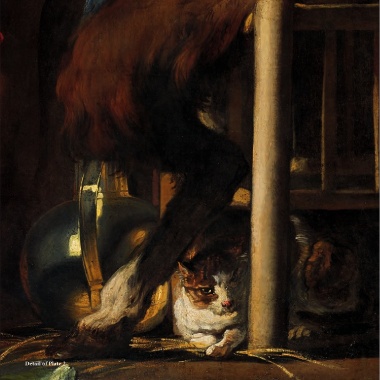
Fig. 6. Jordaens. Louvre, Cabinet de Dessins, The Satyr and the Peasant   Fig. 7. Jordaens, Belgium, Brussels. Royal
                                                                                                                                                                           Family, Inv.20028.                                                 Museums of Fine Arts of


                                                                                                                                                                           present painting’s priority over the variant at Kassel and its autography without any intervention at this early date
                                                                                                                                                                           by a studio. Thus unconsciously, in this instance at least, Jordaens followed the habit of Caravaggio in working
                                                                                                                                                                           out a composition on the canvas without recourse to pen and wash trials on paper. 8


                                                                                                                                                                           8.   N. Easthaugh, A Survey by infra-red reflectography digital image processing of Jacob Jordaens. The Satyr and the Peasant Family, August
                                                                                                                                                                              1993, Ref: 93231.1.
                                                                                                                                                                              The following report presents the results of a survey of the painting depicting The Satyr and the Peasant Family by Jacob Jordaens
                                                                                                                                                                              using infrared reflectography/digital image processing (IRR/DIP).
                                                                                                                                                                              A key to the positions of the seven IRR/DIP images taken during the survey and a summary of the findings are shown in figure
                                                                                                                                                                              2A and B.  There are a number of changes evident in this painting, most of which are apparent from careful visual examination.
                                                                                                                                                                              Some however are revealed more clearly by the IRR/DIP technique used for this report and in particular we may note the
                                                                                                                                                                              additional figure revealed to the left of the satyr (Fig 2A and B).  Other alterations which became especially clear under IRR/
                                                                                                                                                                              DIP are that of the leg of the child on the left and the re-positioning of the hand of the woman in the hat.  The appearance of
                                                                                                                                                                              most of the other pentimenti, such as that down the right arm of the satyr under the head of the boy or the breast of the woman
                                                                                                                                                                              on the left are clearly the result of a technique which involves the basic design being laid in with a light-coloured and impasto
                                                                                                                                                                              over which darker colours are then applied.  In fact there are a number of other minor alterations not readily visible by IRR/
                                                                                                                                                                              DIP (such as in the blue skirt of the woman holding the child on the left), which are like this.


                                                                          66                                                                                                                                                    67


           Detail of Plate 2

