


Page 59 - Joseph Wright of Derby: Virgils's Tomb & The Grand Tour.
P. 59
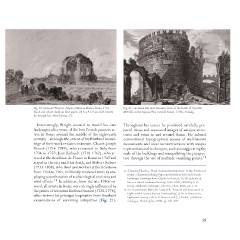
Fig. 20. RICHARD WILSON, Temple of Minerva Medica, Rome, 1754,   Fig. 21. GIOVANNI BATTISTA PIRANESI,View of theTomb of Caecilia
black and white chalk on blue paper, 28.6 x 41.9 cm.Yale Center  Metella on the AppianWay outside Rome, 1760s, etching.
for British Art, New Haven, CT.

  Interestingly, Wright seemed to model his own                  Throughout his career he produced carefully pre-
landscapes after some of the best French painters ac-            pared views and measured images of antique struc-
tive in Rome around the middle of the eighteenth                 tures and ruins in and around Rome. He infused
century – although the extent of his firsthand knowl-            conventional topographical scenes of well-known
edge of their work remains unknown. Claude-Joseph                monuments and ideal reconstructions with unique
Vernet (1714-1789), who remained in Italy from                   representational techniques, such as exaggerating the
1734 to 1753, Jean Barbault (1718-1762), who ar-                 scale of the buildings and manipulating the perspec-
rived at the Académie de France in Rome in 1749 and              tive through the use of multiple vanishing points.15
stayed in the city until his death, and Hubert Robert
(1733-1808), who lived and worked at the Académie                14. T. Barton Thurber, ‘From ‘Learned Architecture’ to the ‘Poetics of
from 1754 to 1765, brilliantly rendered ruins by em-                Ruins’: Classical Building Types and Motifs in Selected French
ploying a combination of archaeological curiosity and               Landscape Paintings from Claude to Robert,’ in The Splendor of
vivid effects.14 In addition, from the late 1740s on-               Ruins in French Landscape Painting, 1630-1800, edited by S. D.
ward, all artists in Rome were strongly influenced by               Borys, exhibition catalogue, Oberlin, Ohio, 2005, pp. 1-15.
the prints of Giovanni Battista Piranesi (1720-1778),
who derived his principal inspiration from firsthand             15. See in particular Malcolm Campbell, ‘Piranesi and Innovation in
examinations of surviving antiquities (Fig. 21).                    Eighteenth-Century Roman Printmaking,’ in Art in Rome in the
                                                                    Eighteenth Century, eds. E. P. Bowron and J. J. Rishel, exhibition
                                                                    catalogue, Philadelphia, 2000, pp. 561-567.

                                                                                                                                  59

