


Page 60 - Joseph Wright of Derby: Virgils's Tomb & The Grand Tour.
P. 60
Piranesi’s vast production of etchings reflected a com-                                                                                                © DERBY MUSEUM AND ART GALLERY
bination of remarkable imagination and a deep under-
standing of Roman construction, which helped to
cultivate an unprecedented appreciation for Imperial
architecture. As a result of Piranesi’s extraordinary
ability to both document and recreate the heritage of
the past, contemporary artists like Wright were in-
spired to reassess the magnificence of the classical
world.16

                 lll

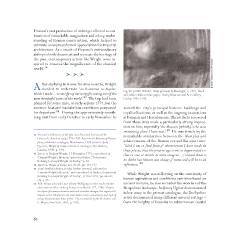
A fter studying in Rome for nine months,Wright                                   Fig. 22. JOSEPH WRIGHT, Study of Clouds by Moonlight, c. 1771, black
     decided to undertake ‘an Excursion to Naples,                               and white chalk on blue paper. Derby Museum and Art Gallery,
which I made…to satisfy my curiosity for seeing one of the                       Derby, 1996-1/82.
most wonderful parts of the world.’17 The trip had been
planned for some time, as early as June 1774, but the                            visited the city’s principal historic buildings and
summer heat and insalubrious conditions postponed                                royal collections, as well as the ongoing excavations
his departure.18 During the approximately month-                                 at Pompeii and Herculaneum.The artifacts recovered
long visit from early October to early November he                               from these sites made a particularly strong impres-
                                                                                 sion on him, especially ‘the Museum [which] is the most
16. Piranesi’s influence on Wright was discussed by Francis W.                   interesting place I have seen.’19 He was struck by the
   Hawcroft, Travels in Italy, 1776-1783. Based on the Memoirs of Thomas         remarkable similarities between the lifestyles and
   Jones, exhibition catalogue, Manchester, 1988 (cited in Judy                  achievements of the Roman era and his own time:
   Egerton, Wright of Derby, exhibition catalogue,Tate Gallery,                  ‘Glad I am to find from ye observations I have made in
   London, 1990, p. 143).                                                        these places, that the present age is not so degenerated ei-
                                                                                 ther in size or morals as some imagine…; indeed there is
17. Letter to Richard Wright, 11 November 1774, reproduced in                    no doubt but Nature was always ye same and will be so ad
   ‘Hannah Wright’s Memoir,’ quoted in Barker, “Documents                        infinitum.’20
   Relating to Joseph Wright ‘of Derby,’” p. 84.
                                                                                   While Wright was reflecting on the continuity of
18. Egerton, Wright of Derby, nos. 83-84, pp. 146-147.                           human aspirations and conditions over time based on
19. Local Studies Library, Derby, ‘Italian Journal,’ collected in                ancient remains, he also recorded the wonders of the
                                                                                 Neapolitan landscape.As Jenny Uglow demonstrated
   ‘Hannah Wright’s Memoir,’ and reproduced in Barker, Documents                 in her essay in the present catalogue, the Derbyshire
   Relating to Joseph Wright ‘of Derby’, (1734-1797),’ pp. 64-68,                artist documented many different natural settings –
   esp. p. 65.                                                                   from the heights of Vesuvius to subterranean coastal
20. Ibid. About a decade later Johann Wolfgang Goethe made similar
   observations after visiting Pompeii on March 11th, 1786: ‘Despite
   the lapse of so many centuries and such countless changes, this region still
   imposes on its inhabitants the same habits, tastes, amusements, and style of
   living’ (Italienischen Reise [1816-17], translated by W. H. Auden and
   E. Mayer, NewYork, 1962, p. 199).

60

