


Page 15 - Luca Giordano - Liberation of St Peter
P. 15
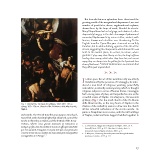
But beneath this new splendour there threatened the
                                                                       growing world of the marginal and dispossessed, as a vast
                                                                       number of prostitutes, slaves, vagabonds and orphans,
                                                                       drawn there by the hope of work, flooded its streets.
                                                                       Many Neapolitans had no lodgings, and clustered, often
                                                                       desperately hungry, in the dark doorways of palaces and
                                                                       convents; Naples was dirty, crime ridden, violent, with
                                                                       famine, disease and rebellion ever threatening. To the
                                                                       English traveller Fynes Moryson it seemed an earthly
                                                                       Paradise, but he adds a chilling vignette of the life of the
                                                                       streets, suggesting the cheapness in which human life was
                                                                       held. In the market place, he writes, is a stone, where
                                                                       gamblers ‘play away their liberty at dice, the king’s officers
                                                                       lending them money, which when they have lost, and cannot
                                                                       repay, they are drawne into the gallies, for the Spaniards have
                                                                       slaves of both sexes’.2 Acts of violence were so common that
                                                                       they often past unpunished.

                                                                                        lll

Fig. 1. CARAVAGGIO, The Seven Acts of Mercy, 1606-1607. Oil on         I n these years the art of this wondrous city was utterly
canvas, 387 x 256 cm. Church of the Pio Monte della Misericordia,         transformed by the presence of Caravaggio; he intro-
Naples.                                                                duced a new kind of religious painting, powerfully
                                                                       naturalistic, insistently contemporary, which re-thought
and sounds.The French traveller, Jean Jacques Bouchard,                religious subjects in terms of human drama. Caravaggio
marvelled at the dazzling lights that clustered around the             had a strong sense of place, and responded at once to the
tombs in churches at Easter, and the festival of the Resur-            crowded scenes of Naples. His altarpiece, The Seven Acts
rection, where ‘cette grande multitude de liminaires et                of Mercy, (Fig. 1) for the small church of the Pio Monte
musique qui fait dans les tenebres de la nuit un effet plus admirable  della Misericordia, at the very heart of Naples in the
que l’on sçauroit s’imaginer, l’on peut dire que cette procession      shadow of the cathedral, seems to draw into the church
ci merite d’estre mise au nombre des choses [les] plus remarquarbles   all the colourful turbulence of the vicolo outside. He
et singulières de l’Europe’.1                                          paints a Neapolitan street scene, with the tall buildings
                                                                       of Naples, naked and lame beggars huddled together in

                                                                       1. J. J. Bouchard, Voyage dans le Royaume de Naples, 1632, ed. E.
                                                                          Kanceff) Turin 1977, p.192 . See also D. Fabris, Music in
                                                                          Seventeenth Century Naples, Bodmin, 2007, p. 4.

                                                                       2. F. Moryson, Containing his twelve years travel through the twelve
                                                                          dominions, London, 1617, p. 111.

                                                                       13

