


Page 19 - Luca Giordano - Liberation of St Peter
P. 19
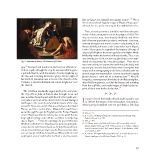
Fig. 4. ANTONIO DE BELLIS, The Liberation of St Peter.             flies and gnats are powerful even against princes’.12 Many
                                                                   chroniclers echoed Lassels’ image of Masaniello as a pun-
quy.10 Betrayed and murdered, his head cut off and car-            ishment for sin, and a warning to the established order.
ried on a spike through the city, he was nonetheless given
a splendid burial, with thousands of torches lighting up             Then, several years later, rebellion was followed by the
the sky, and restoring his former glory. On the night of           worst of these cataclysmic events, the plague of 1656.The
his death St Januarius was seen over the church of the             city, as we have seen, was densely inhabited, and about
Carmine, a sword in his hand and a most bright star over           half of its vast population perished, whilst the economy,
the church.                                                        severely damaged and was to recover only slowly. In his
                                                                   Notizie del Bello,dell’Antico e del Curioso della Città di Napoli,
  The rebellion was finally suppressed by the entry into           Carlo Celano gives an anguished description of heaps of
the city of Don John of Austria who brought to an end              corpses piled high in the most regal street in Naples which
nine months of anarchy and wild disorder. Its results were         brilliantly evokes the horrors of these months;‘Then in the
everywhere present, in the deserted streets and damaged            most unlucky year 1656, our poor city (fooled by its own confi-
buildings, in the most densely inhabited parts of the city,        dence) was assassinated by a most fierce plague...There was no
around S. Domenico and S. Chiara, and between the Castel           more room to bury, nor anyone who could bury [the dead]; with
Nuovo and the market place. Masaniello’s swift fame                my own eyes I saw this Strada di Toledo where I lived paved with
spread through Europe; the English traveller Richard Lassels       corpses so that carriages going to the Palazzo [Reale] could not
wrote ‘Naples would be the richest place in the world. But the     proceed except over baptised flesh. I cannot describe this tragedy
king’s officers if they suck in Milan, and fleece in Sicily, they  further because I could not do so without tears’13 Niccolò
sley in Naples...’.11 But the uprising of a poor fisherman         Pasquale, a contemporary chronicler, in a brilliant metaphor,
filled him with horror;‘They shewed me the house of this fish-     described how painters, stricken by disease, and tumbling
erman; but the other houses shewd me his fury.Thousands have       from the scaffolds, now made images of death by the im-
not yet recovered those ten days’ tumults.Thus we see that when    print of their own bodies in the dust.14
men are ripe for rebellion, Cromwells and Mazaniells are cried
up for great men: or rather when God hath a mind to punish,                         lll

                                                                   I n June of 1656 the health officials made a public vow
                                                                      to defend the Virgin of the Immaculate Conception,
                                                                   whose purity triumphed over sin and death; a few days

                                                                   10. Ibid., p. 21.
                                                                   11. R. Lassels, TheVoyage of Italy, Or a Compleat Journey Through Italy,

                                                                      Paris 1670, vol. 2, p. 282.
                                                                   12. Ibid., p. 283.
                                                                   13. C. Celano, Notizie del Bello, dell’Antico e del Curioso della Città di

                                                                      Napoli, Naples 1692, pp. 1401-1402; as given in J. Clifton, ‘Mattia
                                                                      Preti’s frescoes for the City Gates of Naples’, in Art Bulletin, 1994,
                                                                      vol. LXXVI, p. 479.
                                                                   14. A. Porzio, ‘Immagini della peste del 1656’, in Civiltà del Seicento a
                                                                      Napoli, catalogue of exhibition, Naples 1984, p. 51.

                                                                   17

