


Page 40 - Vision & Ecstasy - Giovanni Benedetto Castiglione's St. Francis.
P. 40
the feet, and the points on the reverse side.The heads of the nails
                                                    in the hands and feet were round and black, and the points
                                                    somewhat long and bent, as if they had been turned back’.20

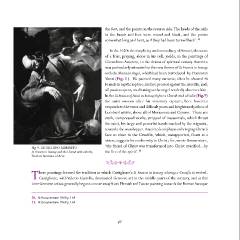
Fig. 9. GIOACHINO ASSERETO                             In the 1620s the simplicity and immediacy of Strozzi, the sense
St Francis in Ecstasy and the Cherub with aViolin,  of a friar, praying, alone in his cell, yields, in the paintings of
Detroit Institute of Arts                           Gioacchino Assereto, to the drama of spiritual ecstasy. Assereto
                                                    was particularly attracted to the new theme of St Francis in Ecstasy
                                                    with the Musician Angel, which had been introduced by Francesco
                                                    Vanni (Fig. 3 ). He painted many variants; often he showed St
                                                    Francis in mystic rapture, his face pressed against the crucifix, and,
                                                    all passion spent, meditating as the angel tenderly observes him.
                                                    In the St Francis of Assisi in Ecstasy before a Cherub with aViolin (Fig.9)
                                                    the saint swoons after his visionary rapture; here Assereto
                                                    responds to the tense and difficult poses and heightened pathos of
                                                    Lombard artists, above all of Morazzone and Cerano. These are
                                                    stark, compressed works, stripped of inessentials, which thrust
                                                    the saint, his large and powerful hands marked by the stigmata,
                                                    towards the worshipper. Assereto’s emphasis on bringing Christ’s
                                                    face so close to the Crucifix, which, unsupported, floats as a
                                                    vision, suggests his conformity to Christ; for, wrote Bonaventure,
                                                    ‘the friend of Christ was transformed into Christ crucified...by
                                                    the fire of the spirit’.21

                                                    678

T hese paintings formed the tradition in which Castiglione’s St Francis in Ecstasy adoring a Crucifix is rooted.
     Castiglione, with Valerio Castello, dominated Genoese art in the middle years of the century, and at this
time Genoese artists generally began to move away from Flemish andTuscan painting towards the Roman baroque

20. St Bonaventure 1868 p.164
21. St Bonaventure 1868 p.164

                                                    42

