


Page 47 - Vision & Ecstasy - Giovanni Benedetto Castiglione's St. Francis.
P. 47
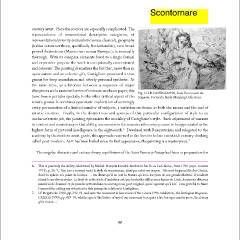
Scontornare

century artist. Here the sources are especially complicated. The
transcendence of conventional descriptive categories, of
representational priority (naturalistic versus classical), geography
(Italian versus northern, specifically Netherlandish), even broad
period distinctions (Mannerism versus Baroque), is unusually
thorough. With its complex elements fused to a single formal
and expressive purpose the work is exceptionally concentrated
and coherent.The painting dramatises the fact that, more than an
open nature and an eclectic gift, Castiglione possessed a true
genius for deep assimilation and utterly personal synthesis. At
the same time, as a fulcrum between a sequence of major
altarpieces and a sustained series of intimate works on paper, this Fig. 3 G.B.CASTIGLIONE, Saint Francis with the
Saint Francis pertains specially to the other critical aspect of the Stigmata, Formerly Suida-Manning Collection.
artist’s genius. It combines systematic exploration of seemingly
every permutation of a limited number of subjects, a variation-on-theme as both the means and the end of
artistic creation. Finally, in the distinctness and aptness of this particular configuration of style to an
uncharacteristic job, the painting epitomizes the modality of Castiglione’s style. Such adjustment of manner
to context and consistency in that ability, uncommon in the seventeenth century, came to be appreciated as the
highest form of pictorial intelligence in the eighteenth.6 Devalued with Romanticism and relegated to the
academy by the modern avant-garde, this approach returned to the fore in the late twentieth-century thinking
called post-modern. As it has been hailed since its first appearance, the painting is a masterpiece.7

   The singular character and extraordinary equilibrium of the Saint Francis in Ecstasy had been in preparation for

6. This is precisely the ability celebrated by Michel-François Dandré-Bardon in his Vie de CarleVanloo, Paris 1765 (rept. Geneva
     1973), p. 26:‘C.Van Loo a souvent varié le style de son pinceau, ainsi que celui son crayon. Tels sont les procédés des Génies,
     don’t la sphere n’a point de bornes…. On dirait qu’il ne voit la Nature qu’avec les yeux de ces grands Maîtres: il voudrait
     réunir leurs divers styles. Le fruit de cette sorte d’ambition est, que toutes les differences façons de Carle, toutes ses diverses
     manières de dessiner et de peindre jettent dans ces ouvrages un gout original, qui n’apparait qu’à lui.’ I am grateful to Marc
     Fumaroli for calling my attention to this passage in relation to Castiglione.

7. Cf. Brigstocke 1980, pp. 292-93, and note the comment in his review of the Genoa 1990 exhibition, The Burlington Magazine,
     CXXXII (1990), pp. 429-30, which regrets‘the failure of any of our museums to acquire a late baroque masterpiece, the Ecstasy
     of St Francis…’

                                                  49

