


Page 58 - Vision & Ecstasy - Giovanni Benedetto Castiglione's St. Francis.
P. 58
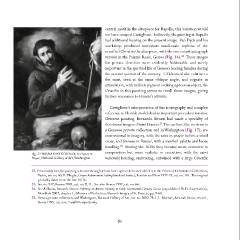
Fig. 17 BERNARDO STROZZI, St Francis in      central motif in the altarpiece for Rapallo, this variation would
Prayer, National Gallery of Art,Washington.  not have escaped Castiglione. Indirectly, the painting at Rapallo
                                             had additional bearing on the present image. Van Dyck and his
                                             workshop produced numerous small-scale replicas of the
                                             crucified Christ in the altarpiece, with the one extant autograph
                                             version in the Palazzo Reale, Genoa (Fig. 16).23 These images
                                             for private devotion were evidently fashionable and surely
                                             important in the spiritual life of Genoa’s leading families during
                                             the second quarter of the century. Of identical size relative to
                                             the saint, seen at the same oblique angle, and cognate in
                                             articulation, with its thick pigment evoking a precious object, the
                                             Crucifix in this painting seems to recall these images, giving
                                             further resonance to Francis’s attitude.

                                                Castiglione’s interpretation of this iconography and complex
                                             reference to Flemish models had an important precedent in native
                                             Genoese painting. Bernardo Strozzi had made a specialty of
                                             devotional images of Saint Francis.24 The earliest, like versions in
                                             a Genoese private collection and in Washington (Fig. 17), are
                                             conventional in imagery, with the saint in prayer before a small
                                             cross, and Sienese in flavour, with a rarefied palette and loose
                                             handling.25 During the 1620s they became more eccentric in
                                             composition but more realistic in execution, with the saint
                                             variously holding, embracing, entwined with a large Crucifix

22. Presumably lost, the painting is known through at least four copies, the best of which is in the Prince of Lichtenstein Collection,
     Vaduz, inv. no. 60; H.Vlieghe, Corpus Rubenianum Ludwig Burchard:Saints,I, London and New 1972-73, cat. no. 101. The original
     probably dated from the late 1610s.

23. Inv. no. 947; Barnes 2004, cat. no. II.11. See also Genoa 1997, cat. no. 66.
24. See A. Banta, Bernardo Strozzi: Defining an Artistic Identity in Early Seventeenth-Century Genoa (unpublished Ph.D. dissertation),

     NewYork 2007, chapter 1:‘Mirrors of Perfection: Strozzi’s Images of St. Francis,’ pp. 9-60.
25. Genoa, private collection, andWashington, National Gallery of Art, inv. no. 2002.78.1; L. Mortari, Bernardo Strozzi, rev.ed.,

     Rome 1995, cat. nos. 7 and 89 respectively.

                                             60

