


Page 61 - Vision & Ecstasy - Giovanni Benedetto Castiglione's St. Francis.
P. 61
hillside in the background take up still more of the

                                                              painting’s area, reaching the height of the saint’s waist

                                                              and completing his enclosure. A generic rise of ground

                                                              with emblematic vegetation in the preceding

                                                              altarpiece now seems a specific place and a

                                                              surrounding nature. Second, the composition has been

                                                              carefully organised and integrated with a calculus that

                                                              still owes to the lessons of Poussin and classical style

                                                              in Rome. The diagonal of the foreground sets the

                                                              structural tone as in Osimo, but with the saint’s left

                                                              arm and the hillside now seconding it. The Crucifix,

                                                              however, interrupts that ascent to assert another,

                                                              steeper diagonal that reaches its isoscelean

                                                              counterpart, along the saint’s back and hood, at the

                                                              point where his face meets Christ. As subtle as it is

                                                              meaningful, this inscription of shape within vector

                                                              represents both a mastery of the kind of calculus and

                                                              a refinement of the specific structure that are more

                                                              enunciated in the San Luca Nativity. Finally, the fused

                                                              brushwork and smooth modulation of Van Dyck’s

                                                              paint handling, a regular aspect of Castiglione’s work

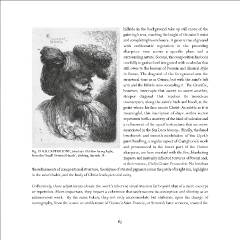
Fig. 19 G.B.CASTIGLIONE, Head of a Old Man Facing Right,      and pronounced in the lower part of the Osimo
from the ‘Small Oriental Heads’, Etching, Bartsch 34.         altarpiece, are here overlaid with the fine, blanketing
                                                              impasto and mutually inflected textures of Strozzi and,

                                                              at their source, Giulio Cesare Procaccini. No less than

the refinements of compositional structure, the rhyme of striated pigment across the patch of bright sun, highlights

in the saint’s habit, and the body of Christ lends pictorial unity.

Collectively, these adjustments elevate the work’s inherent visual interest far beyond that of a mere excerpt
or repetition. More important, they impart a coherence that underscores its conception and identity as an
autonomous work. By the same token, they not only accommodate but elaborate upon the change of
iconography, from the iconic or emblematic of Osimo’s Saint Francis, or Strozzi’s later versions, toward the

                                                          63

