


Page 225 - The mystery of faith
P. 225
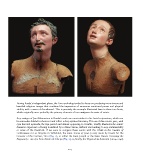
During Rueda’s independent phase, the Toro workshop tended to focus on producing more sincere and
heartfelt religious images that combined the impression of enormous emotional power and physical
vitality with a sense of the ethereal. This is precisely the example illustrated here in these two busts,
which originally were probably the primary elements of two imágenes de vestir of saints.

Any vestiges of Juni Mannerism in Rueda’s work are most evident in his facial expressions, which can
be somewhat doleful in character and reflect a deep spiritual intensity. The use of this ecstatic gaze, with
eyes directed upwards, the lips parted and almost appearing to tremble, vividly illustrates the saints’
dramatic experience of being transfixed by a divine vision, without succumbing to any sentimentality
or sense of the theatrical. If we were to compare these works with the Christ in the Garden of
Gethsemane in Las Brígidas in Valladolid, the Saint Teresa of Jesus (1622) made by Rueda for the
Convent of the Carmen, Toro (Fig. 1), or either the Saint Joseph or the Saint Francis Receiving the
Stigmata (c. 1622) in Santa María de Alaejos (Fig. 2), or, finally, the Virgen de la Asunción (1624–1646)

                                                                 225

